
 22 Jun 2026
 23 min read
Deploying a new streaming app? Most people would scratch their heads hearing such an idea. It seems like all the spots on the streaming podium have been permanently taken by unshakeable giants. But that is an illusion. Just as the global market dominated by powerful social media platforms has undergone massive, unexpected shake-ups in recent years, significant shifts are now appearing on the horizon of music streaming.
New music streaming app? The time is now
Modern users are completely fatigued by the onslaught of soulless AI-generated content, especially when it is accompanied by a total lack of algorithmic transparency. They are also looking much closer at how tech giants operate, scrutinizing how global streaming services distribute their revenue.
Listeners are actively searching for new, alternative ways to support their favorite artists directly and fairly. Interestingly, despite being deep in the digital era, physical live concerts by major stars are breaking absolute attendance records. Genuine fan connection and community building have once again become the ultimate pillars of success.
You can read about all of this in greater detail in our full ebook. In the meantime, this guide dives into the actual process of designing and deploying an advanced streaming application.
![v1[ad] soundscapes od 2026](https://www.miquido.com/wp-content/uploads/2023/03/v1ad-soundscapes-od-2026-2048x1075.jpg.webp)
Where should you begin, what should you watch out for, and what should you avoid at all costs? Leveraging our extensive experience in music app development, we are glad to break down this process piece by piece to help you build a truly succesful music app.
What to know before developing a music streaming app? Music app builder checklist
There is no single formula for a successful music application. However, there are fundamental strategic, technical, and legal pillars that you must meticulously plan out before writing your first line of code.
1. Product definition & UVP
The era of traditional audio streaming apps that serve solely for passive music playback from the cloud is drawing to a close. Major industry players are continuously testing new waters and aggressively expanding their feature sets. The key is ensuring absolute ecosystem coherence. You must precisely define which direction your product will take:
- Will you focus on streamlining the booking of real-world music experiences (concerts, ticket sales, live events) and selling official merchandise?
- Will you deploy advanced social and collaborative features, such as collaborative real-time playlist curation?
- Will your model focus heavily on directly connecting artists with their fanbases, empowering fans to become creators through interactive co-creation or in-app remixing tools?
2. Market strategy: Niche vs. super-app
This is a vital business question. While building an all-in-one super app design is an enticing prospect due to its broad reach, paradoxically, it can be much easier for niche players to find a footing and sustain themselves in today's market.

3. Deep competitive intelligence
The streaming market is highly saturated. However, this does not mean there is no room for innovative entrants. Before attempting to challenge an industry where Spotify, Youtube Music or Apple Music set the standard, you must discover definitive answers to these crucial questions:
- Who is my primary competitor in the industry, and why (specifically within your target niche or geography)?
- Which features are offered by all key competitors as a basic market standard, and which ones are only offered by a few?
- Which highly demanded user features are currently completely unaddressed by any of your primary competitors?
- What are the top reasons driving users to churn from your key competitors? Which platforms do they switch between most frequently, and how can you capitalize on their pain points?
- How does each competing music streaming platform approach premium tiers, student/family bundles, and in-app advertising monetization frameworks?
- Tip: While professional focus groups are the gold standard for this data, active online forums like Reddit or ProductHunt serve as an absolute goldmine for uncovering real user frustrations and churn triggers. Once this stage is complete, you should clearly map out your Unique Selling Proposition (USP).
4. Music licensing integration & legal compliance
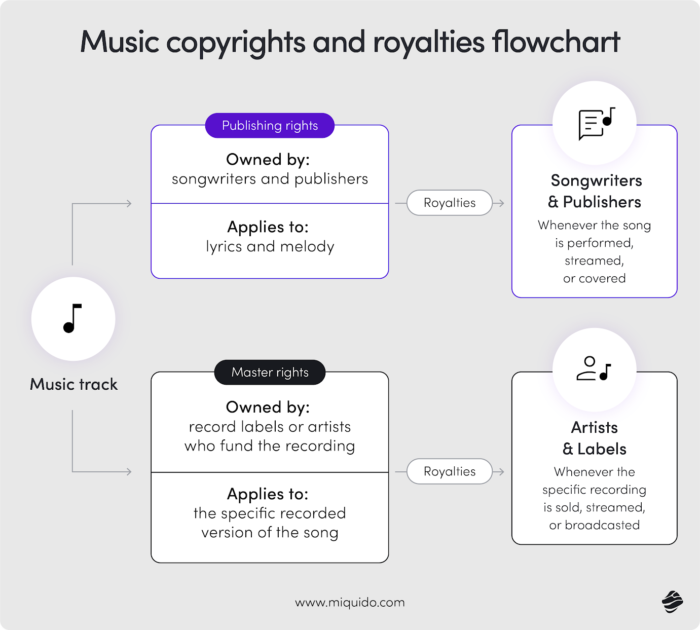
Distributing music legally requires an uncompromising approach to copyright laws. A robust music licensing integration is technically and legally the most intricate layer of your project. You must understand how copyright frameworks vary across different jurisdictions (e.g., the US vs. EU) and guarantee total compliance:
- Sound recording rights (Master rights): These generally belong to record labels or independent distribution aggregators, requiring direct licensing negotiations to secure catalog access.
- Musical composition rights (Publishing rights): These belong to songwriters, composers, and lyricists, managed by Performing Rights Organizations (PROs) or collective management organizations like ASCAP, BMI, PRS, or local entities worldwide.
- Royalties collection & distribution infrastructure: Every single stream triggers micro-payments split into mechanical royalties (for reproducing the composition) and public performance royalties (for playing it publicly). These are aggregated via PROs and distribution clearings, which route payouts back to the copyright owners based on usage logs generated by your app.
5. Payout model & financial architecture
How will your platform aggregate and distribute its subscription and advertising revenues? Your chosen model heavily dictates your database architecture and streaming ledger:
- Pro-rata model: All pool revenues are combined into one master bucket and distributed strictly based on total overall stream share across the entire platform. This heavily favors top-tier mainstream pop stars.
- User-centric payout model: The subscription fee of an individual user is distributed exclusively to the specific artists that particular user actually listened to during that monthly cycle. This model is increasingly demanded by music communities to support independent and niche creators fairly.
- Direct artist support / micro-tipping: Integrating mechanisms for direct fan-to-artist financial support, profile subscriptions, or virtual tipping walls.
6. Offline listening capabilities & caching infrastructure
Users expect flawless app performance regardless of connectivity, whether on a flight, underground, or in remote zones.
- Robust offline listening: Implementing an advanced, encrypted local caching mechanism on the user's device. Downloaded audio files must be wrapped in strict Digital Rights Management (DRM) containers to completely prevent piracy and unauthorized extraction.
- Adaptive Bitrate Streaming: Implementing real-time protocol switching (e.g., smoothly shifting from 96 kbps up to Lossless/Hi-Res audio) to automatically match the user’s instantaneous cellular or Wi-Fi network throughput.
7. Advanced recommendation engines & churn mitigation
The ultimate engine driving retention for modern streaming services lies in deep personalization algorithms.
- Developing hybrid recommendation systems that combine Collaborative Filtering (user behavior profiling), Content-Based Audio Analysis (AI-driven acoustic scanning), and contextual metadata graphs.
- Deploying dynamic, automated daily mixes and weekly discovery loops to keep user engagement fresh, directly minimizing platform churn.
Defining your music app business model
The global music streaming market is notoriously saturated, heavily guarded by deep-pocketed titans who have commodified access to the world’s catalog. Yet, entering this space is far from a fool's errand. If you introduce a razor-sharp differentiator, a new platform can carve out an incredibly lucrative, loyal ecosystem. The central question for modern developers has shifted: How do you shift your app from a passive audio utility into an active financial and cultural hub that users willingly pay to be a part of?
The superfan economy and alternative payouts
According to Goldman Sachs Research, monetization of superfans could add $2 billion of incremental revenue for streaming platforms by 2027 and $4 billion by 2030, representing a 16% boost to paid streaming revenues. Monetizing the modern listener requires moving past the industry's default "pro-rata" music royalty management. Here, a user's subscription fee is thrown into a giant pool and distributed solely based on market share. Such a system dilutes payouts to independent artists to fractions of a cent.
Modern market entry requires looking closely at platforms like Qobuz and Deezer, which established themselves through transparent, artist-centric compensation frameworks. Qobuz maintains an exclusive paid tier yielding an industry-leading average payout of roughly $0.018 per stream, while Deezer pioneered specialized Artist-Centric Payment Systems (ACPS) to boost rewards for active fan engagement over algorithmic filler noise.
Instead of relying purely on generalized subscriptions, the platform can remain free to download. Premium artist-centric spaces can stay behind microtransactions. Fans unlock direct artist backing through digital tipping, exclusive live virtual listening rooms, and integrated digital/physical merchandise bundles. By combining traditional streaming with a dedicated fan ecosystem, the app turns casual listeners into direct financial patrons.
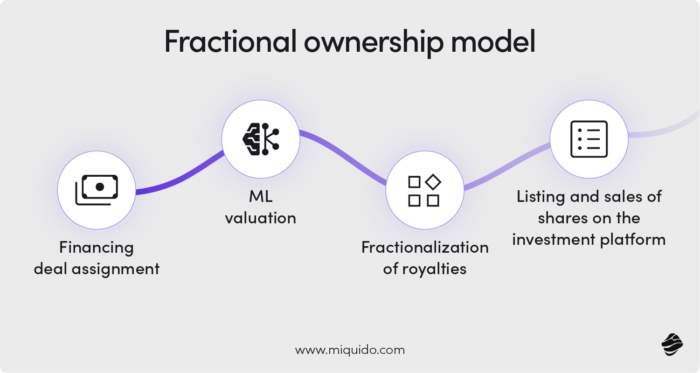
The infrastructure can expand further by transforming engagement into verifiable marketplace liquidity. NBER paper documents that fractional song ownership has increased substantially, with the mean number of songwriters and publishers per song tripling in recent years. Integrating fractional ownership models allows listeners to buy tradable royalty shares in specific tracks via algorithmic valuations. Dedicated loyalty management systems then reward active streaming milestones with exclusive investment access or governance tokens. The framework ties listener loyalty directly to the long-term commercial performance of the music asset.
ANote Music, a regulated fractional ownership marketplace, distributed over €1 million in royalties to investors from 2020–2023 with a reported gross average IRR of 10.59%, and €240,000 in H1 2024 alone. It demonstrates that secondary-market liquidity for royalty shares generates measurable, auditable investor returns at scale.


Next-gen advanced features: Discovery, fintech, and AI trust
Consider the following modern segments when architecting your platform's revenue and feature loops: Algorithmic fatigue is real. A refreshing discovery logic should pivot away from automated predictive filtering toward decentralized human curation. Options include gamified social audio maps and live digital "crate-digging" rooms where users hand-curate sets. Collaborative queues can seamlessly sync natively with social API frameworks.
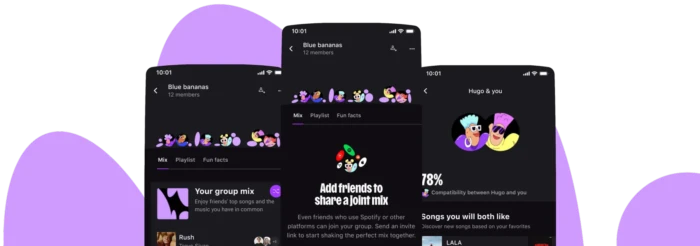
Deezer's Shaker lets you seamlessly merge group playlists across platforms, and native lyric translations.
Bridging the gap between active listening and immediate financial processing is a massive vector for growth. Integrating real-time streaming data with automated split-payout smart contracts ensures instant collection of localized micro-royalties. Session musicians, producers, and indie artists bypass weeks of labels' accounting delays.
Generative audio is flooding streaming pipelines, muddying catalogs with synthetic noise. Incorporating advanced AI monitoring tools at the ingest level is essential for modern platforms. These tools instantly flag copyright infringements, track deepfakes, and accurately redirect royalties to original rightsholders.
When Spotify initially launched, its core thesis was to monetize the digital application interface directly. The company built out its ad-supported freemium tier later as an aggressive user-acquisition strategy.
Today, while freemium is a dominant market baseline, it is not an absolute rule. If your application targets a high-intent audience segment, sidestepping a free tier altogether protects the financial value of the music. The approach generates a higher Average Revenue Per User (ARPU).
Instead of traditional audio commercial blocks that break user immersion, modern ad monetization can utilize non-intrusive visual native displays. Other options include sponsored playlist takeovers or audio promotions customized to match the active listening queue.
Hyperpersonalization and algorithmic retention
While an innovative business model draws users through the door, the backend algorithm determines whether they stay. Users will quickly churn if the daily discovery loop fails to match the highly sophisticated predictive systems they are accustomed to on mainstream platforms. Hyperpersonalization in modern streaming requires moving past elementary genre tags and tempos to analyze deep behavior.
Advanced platform systems must interpret situational metadata. The app should map variables like local weather patterns, changing transit velocities via device sensors, and biometrics gathered from wearable device integrations. The algorithm must organically translate data into a flawless playlist session every single time. Otherwise, users will ultimately return to established competitors.
Defining your premium pricing tiers requires deep alignment with your platform’s primary identity. Mainstream listeners, casual fans, and audiophiles all perceive value through different lenses. A single flat-rate model is no longer effective.
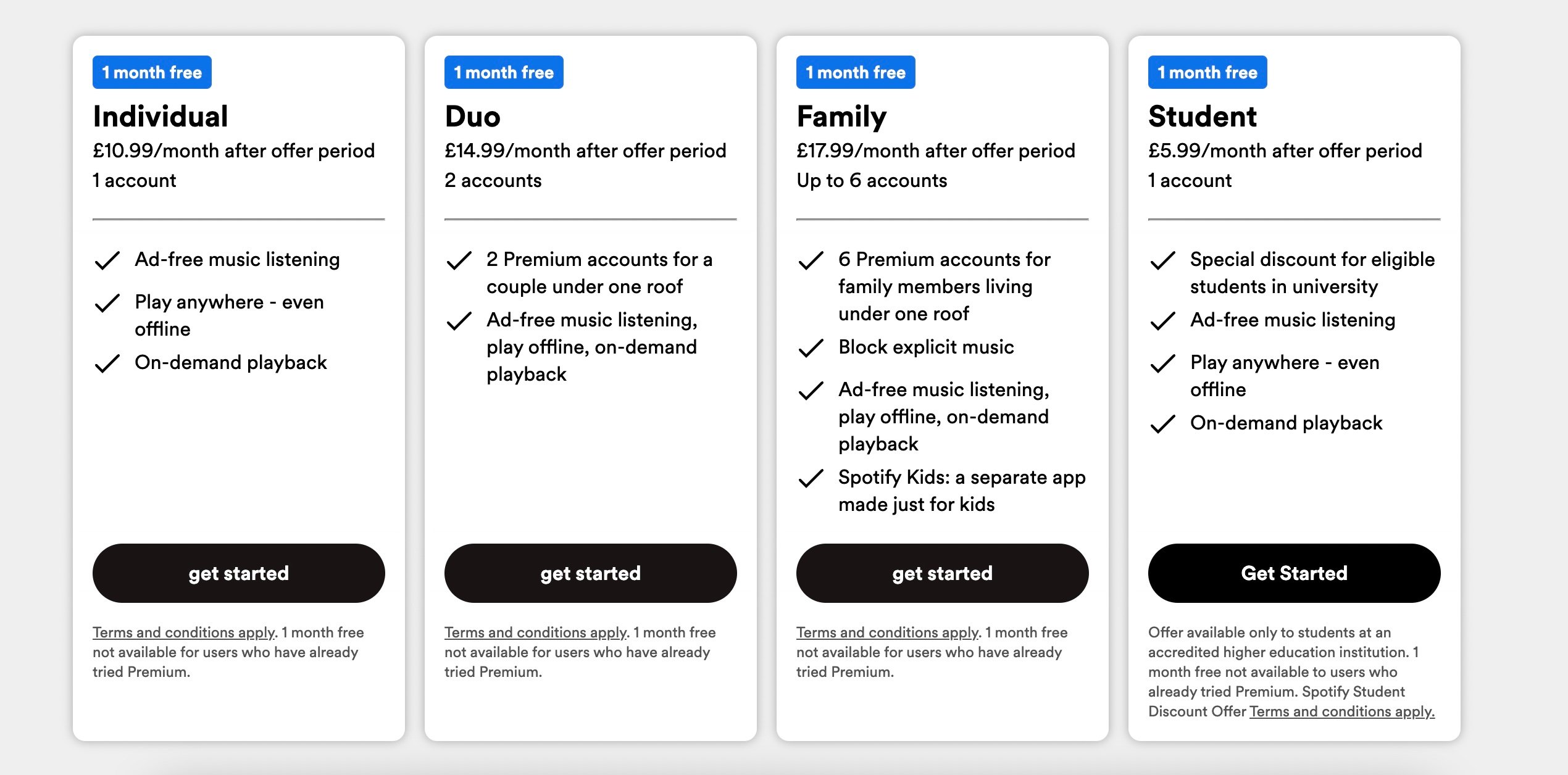
If your application targets the everyday listener, value lies in features, social connection, and intuitive algorithmic discovery. These qualities allow platforms like Deezer to command an $11.99 monthly rate. Conversely, targeting a specialized audience lets you premium-price based on raw utility and audio purity rather than social gimmicks. To capture the maximum lifetime value of your users, your subscription tiers should offer flexible commitments and clear path upgrades. Consider incorporating structures such as:
- The feature-driven casual tier: Priced around standard market rates, offering crisp CD-quality lossless streaming (such as 16-bit FLAC) and robust algorithmic customization. To drive retention, incentivize annual billing cycles that significantly lower the effective monthly cost for the user.
- The boutique purist tier: Tailored strictly for high-fidelity collectors and audiophiles, similar to Qobuz’s Studio model. This tier completely bypasses spatial audio processing in favor of pristine, studio-exact master files (like 24-bit/192 kHz FLAC) paired with digital album art, long-form journalism, and downloadable PDF liner notes.
- The hybrid commerce upgrade: A top-tier, annual-only premium membership that bridges streaming with digital ownership. Subscribers pay a premium to gain full streaming rights alongside steep, direct discounts on permanent file downloads or exclusive artist physical merch bundles.
Setting a benchmark for essential features in music app development
Cramming every possible tool into a single interface creates feature bloat and drives up initial development costs. The resulting setup dilutes your brand identity. Success relies on identifying baseline standard features. You must also find your secret weapons to drive user engagement.
If you are competing directly with mainstream giants, your baseline must feel interactive, intuitive, and highly social. Essential features include an automated, infinite mixtape engine. You also need cross-platform group playlist synchronization utilities, built-in audio identification tools, and real-time lyric translations.
If your platform caters to a focused niche, social sharing and background workout radios are practically non-existent. Instead, your essential engineering budget should be allocated toward seamless integrations with high-end home audio hardware systems, extensive metadata architectures for complex genres like jazz and classical, and immersive editorial layouts.
Music streaming app development timeline
Building a resilient commercial audio platform is a meticulously structured process. Engineering dependencies must be balanced alongside legal and architectural readiness. A standard development cycle safely spans nine to twelve months, though the timeline depends heavily on the complexity of your monetization layers and cross-platform targets.
Rushing through the core architectural phase inevitably introduces fatal playback latency and causes severe synchronization issues post-launch. The total app complexity determines whether you can launch a lean MVP or a fully featured ecosystem for music fans right out of the gate.
Attempting to write code before securing legal licensing clearance is a costly mistake. You should clear performance rights organizations, independent distribution aggregators, and major record labels first to avoid stalling indefinitely and to ensure users access legitimate content legally.
Discovery, licensing, and architecture (Months 1 – 2)
The foundational stage demands total alignment between legal compliance and systems design. Developers must map out data workflows while concurrently negotiating digital mechanical and public performance licenses with regional copyright entities. On the technical side, engineers finalize the technology stack and system architecture at this stage, mapping out relational databases capable of handling heavy metadata alongside high-throughput content delivery network structures.
- Legal clearance & core architecture: Initiate licensing agreements with PROs (ASCAP, BMI, PRS) and independent distribution aggregators (TuneCore, CD Baby). Finalize cloud infrastructure topology and security protocols to ensure music based assets are protected.
- UI/UX prototyping & asset mapping: Design user user-flows emphasizing lightweight navigation and simple design tailored to your target audience. Map out precise layout spaces for superfan monetization hubs, digital storefronts, and media players where listeners will eventually play songs.
Development, testing, and deployment (Months 3 – 12)
Once the foundational contracts and system blueprints are secure, the timeline transitions into heavy engineering and iterative optimization. This phase requires a strict "backend-first" approach. Building a beautiful interface is useless if the underlying audio pipeline cannot instantly decode audio files and stream multi-format audio without stuttering over mobile devices and cellular connections.
- Core backend & streaming pipeline: Weeks 9–16. Construct the streaming server architecture supporting HTTP Live Streaming (HLS) or MPEG-DASH protocols. Implement adaptive bitrate streaming to dynamically adjust audio quality based on user network speeds, ensuring clear delivery of favorite songs. Build out the metadata ingest engine to process track details, artist profiles, and lyrics.
- Frontend integration & core feature assembly: Develop the cross-platform mobile application using frameworks like Flutter or React Native. Integrate the audio playback engine with the user interface to ensure smooth background playback, lock-screen controls, and responsive navigation across playlist views where users can curate their own playlists.
- Fintech & superfan module implementation: Incorporate digital wallet features and payment gateway APIs like Stripe or native App Store/Google Play in-app purchases. This structure allows subscribers to unlock premium features, stream songs on demand, or download tracks for offline listening. Add smart-contract systems for direct artist tipping and build gated superfan community infrastructure, including live virtual listening rooms.
- Algorithmic optimization & ai guardrails: Deploy and train the hyperpersonalization algorithm on behavioral and contextual data, making it easy for users to create playlists automatically. Integrate AI copyright monitoring tools at the content ingest level to actively flag unauthorized duplicate tracks or suspicious synthetic audio uploads before they hit the live index.
- Beta testing, stress testing & compliance: Launch a closed beta to fine-tune app behavior under real-world conditions, offering beta testers unlimited access to the catalog. Perform rigorous load and stress testing on the CDNs to simulate thousands of concurrent streams. Complete comprehensive data security compliance audits such as GDPR and CCPA to safeguard user payment info and listening histories.
- Production launch & post-release optimization: Deploy the finalized application packages to the Apple App Store and Google Play Store. Shift engineering priorities to live telemetry monitoring. Track playback error rates, app latency, and crash logs to roll out immediate performance optimization patches.
Ready to build your music platform?
We can help you reach your goal! Miquido's solutions for Abbey Road Studios, Warner and Dolby have proven to deliver value in a crowded music industry. We will help you find the optimal business path and music monetization strategies.

Top AI innovations delivered monthly!
The administrator of your personal data is Miquido sp. z o.o. sp.k., with its ... registered office in Kraków at Zabłocie 43A, 30 - 701. We process the provided information in order to send you a newsletter. The basis for processing of your data is your consent and Miquido’s legitimate interest.You may withdraw your consent at any time by contacting us at marketing@miquido.com. You have the right to object, the right to access your data, the right to request rectification, deletion or restriction of data processing. For detailed information on the processing of your personal data, please see Privacy Policy.


