On-device AI development

Run mobile AI without cloud risk

Cloud-dependent mobile AI introduces compounding API latency and unpredictable scaling costs. Local, on-device models eliminate both while securing data privacy.

Book a call
AI-Native Mobile App DevelopmentAI-Native Mobile App Development
Universal Music Group
Dolby
Warner Recorded Music
Nolej
Orlen
AI Chatbot Development Services,AI agent development

When you need on-device AI

01

Data privacy and compliance

When your platform processes healthcare records, financial identifiers, or personal data parameters, data residency is your primary constraint. On-device AI ensures sensitive information never leaves the device. This eliminates cloud data leak vectors and maintains full regulatory compliance.

02

Reliable offline performance

In service sectors such as travel, utilities, and healthcare, users frequently operate with unreliable connectivity. Localized edge models ensure continuous performance and sub-millisecond response times, regardless of network availability.

03

Predictable token economics

Scaling cloud APIs to millions of users introduces volatile, unbacked operating costs. Transitioning workloads to local options—like Apple Intelligence, Gemini Nano, or custom edge models—shifts the processing burden to client hardware, removing unpredictable variable costs from your infrastructure budget.

1 of 3

AI built for mobile environments

We bypass stagnant pilots and compliance gaps by identifying where local models deliver real utility, designing the system architecture, and deploying optimized code directly into your mobile framework.

Use case and feasibility assessment

We analyze your existing user journeys, available on-device data, hardware profiles, and connectivity patterns to locate where local inference drives measurable value. Not every use case fits edge execution; we tell you directly which ones do and which don't.

Model selection and architecture design

We evaluate frameworks such as Apple Intelligence, Google Nano, and custom models using CoreML and TensorFlow Lite. We engineer the exact quantization, compression, and fallback strategies needed when hardware capabilities vary across your user base.

Development and device testing

We build localized integrations and run automated testing cycles across our in-house physical device farm. Latency, battery consumption, memory footprint, and model accuracy are thoroughly validated against the realities of hardware fragmentation before release.

Privacy and compliance validation

We map and document the entire localized data flow so your legal and risk teams have clear records for GDPR, HIPAA, or sector-specific sign-offs. Keeping data on-device simplifies compliance, but it still requires engineered rigor.

Production rollout and monitoring

We manage live deployment using staged rollout protocols. Because edge AI behaves differently across hardware generations, we monitor live device fleets for performance degradation, accuracy drift, and unexpected edge cases post-launch.

Your ROI from
on-device AI setup

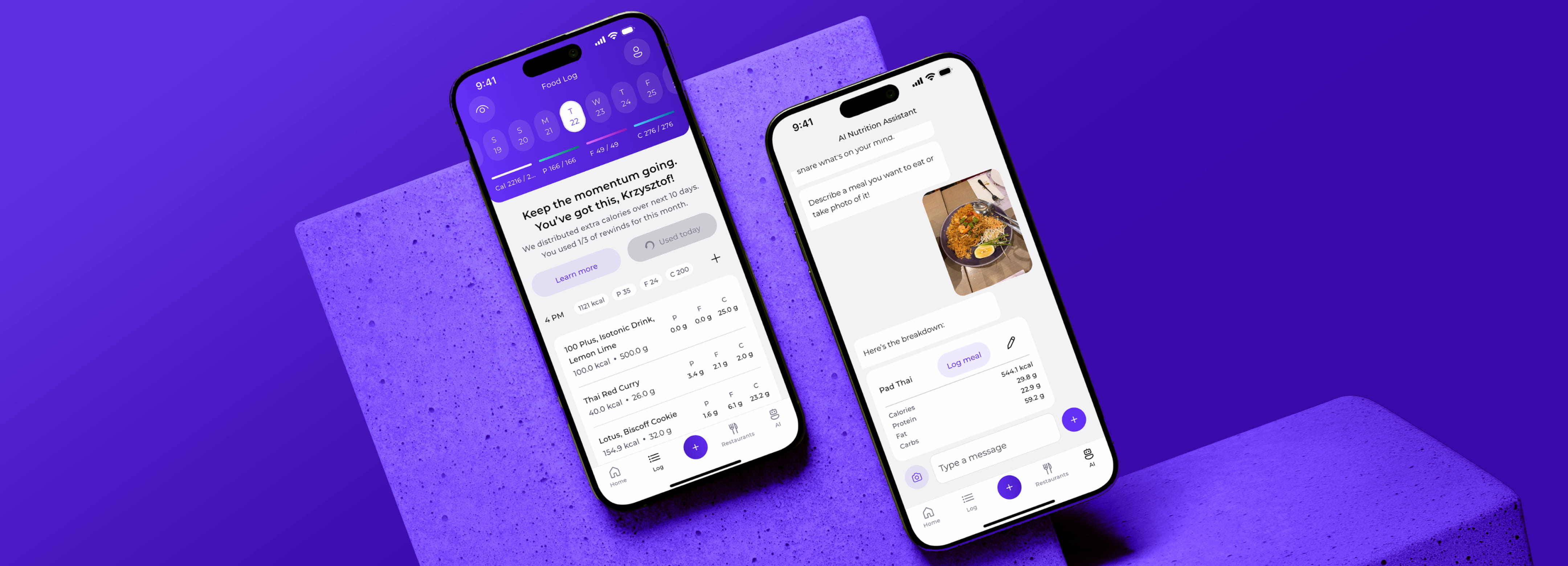
On-device AI running in production

On-device AI running in production

AI features deployed directly on your mobile platform — with zero cloud dependency for use cases where privacy, latency, or offline availability matter.

Architecture designed for your device landscape

Architecture designed for your device landscape

Model selection and implementation architecture tailored to your device profile, OS version distribution, and performance requirements — balancing accuracy, responsiveness, and resource efficiency.

Privacy compliance built in

Privacy compliance built in

Data flows documented and validated against GDPR, HIPAA, or your applicable requirements — helping compliance and legal teams approve deployment with confidence.

Verified across real devices

Verified across real devices

Testing conducted across physical hardware to measure latency, battery impact, memory consumption, and model accuracy under production conditions.

Continuous performance monitoring

Continuous performance monitoring

Production monitoring designed to detect performance degradation, accuracy drift, and edge cases across your live device fleet.

A framework for future AI adoption

A framework for future AI adoption

A repeatable decision framework for evaluating and prioritizing future on-device AI opportunities as mobile hardware and model capabilities evolve.

On-device AI running in production

On-device AI running in production

AI features deployed directly on your mobile platform — with zero cloud dependency for use cases where privacy, latency, or offline availability matter.

Architecture designed for your device landscape

Architecture designed for your device landscape

Model selection and implementation architecture tailored to your device profile, OS version distribution, and performance requirements — balancing accuracy, responsiveness, and resource efficiency.

Privacy compliance built in

Privacy compliance built in

Data flows documented and validated against GDPR, HIPAA, or your applicable requirements — helping compliance and legal teams approve deployment with confidence.

Verified across real devices

Verified across real devices

Testing conducted across physical hardware to measure latency, battery impact, memory consumption, and model accuracy under production conditions.

Continuous performance monitoring

Continuous performance monitoring

Production monitoring designed to detect performance degradation, accuracy drift, and edge cases across your live device fleet.

A framework for future AI adoption

A framework for future AI adoption

A repeatable decision framework for evaluating and prioritizing future on-device AI opportunities as mobile hardware and model capabilities evolve.

Available for projects

Stop paying for cloud APIs where the edge does it better

Review your user data profile, connectivity dependencies, and platform feasibility in a focused technical discussion built on engineering reality, not sales pitches.

Frequently Asked Questions

Haven't you found the answers?

Talk to us

Why choose on-device over cloud AI?

Enterprise AI mobile app development frequently encounters three bottlenecks in cloud infrastructure: latency, cost, and data privacy. Cloud AI requires data to travel to an external server, creating round-trip delays that break real-time personalization or critical workflows. It also exposes your bottom line to variable, token-based API pricing that compounds as your user base scales. On-device AI runs models directly on the user's hardware. This architecture eliminates data transmission risks entirely, functions perfectly offline, and replaces unpredictable cloud compute bills with predictable, zero-marginal-cost local processing.

Which frameworks do we use for on-device AI development?

Deploying the best AI for mobile app development requires choosing specialized frameworks optimized for specific operating systems and hardware accelerators. For iOS ecosystems, we leverage Apple Intelligence and CoreML to tap directly into Apple’s Neural Engine. For Android environments, we utilize Google Nano and the Gemini Nano runtime. When cross-platform continuity or custom edge architectures are required, our engineers use TensorFlow Lite, ONNX Runtime, and PyTorch ExecuTorch to achieve the exact quantization and performance profile your system demands.

Do all phones support on-device AI?

No, and navigating this fragmentation is exactly why a specialized AI-powered mobile app development framework is necessary. Local AI inference relies heavily on modern system-on-chip (SoC) architectures that feature dedicated Neural Processing Units (NPUs) and sufficient RAM. For older or mid-range devices that lack these hardware accelerators, we design programmatic fallback systems. The application detects the device profile at launch and either runs the compressed model locally or seamlessly routes requests to a secure cloud-based endpoint, ensuring the UX never breaks.

Should I build my own model or use a pre-trained one?

When working with a dedicated AI mobile app development company, building a foundational model from scratch is rarely cost-effective unless you are operating in a highly niche domain with proprietary data parameters. Instead, engineering reality points toward optimization. We typically select high-performing, pre-trained open-source models (such as variants of Llama, Mistral, or Phi) or platform-native models (like Google Nano). As an AI-powered mobile app development company, we then apply fine-tuning, Low-Rank Adaptation (LoRA), and strict weight quantization to fit that model to your specific domain logic and device constraints.
Haven't you found the answers?

Talk to us