
 29 Jan 2026
![[header] secure ecommerce integration
an ultimate guide (5)](https://www.miquido.com/wp-content/uploads/2026/01/header-secure-ecommerce-integration_-)
When you launch an e-commerce store, the choice often seems obvious: a ready-made platform allows you to get up and running much faster and without immediate worries.
However, the true cost often surfaces much later, once the business has gained real momentum. You reach for a 360-degree view of your customers based on their behavior in your mobile app—but the data gets stuck somewhere in transit. Or perhaps you try to implement AR features to visualize products in an interior, only to find you cannot integrate them with your inventory in real-time.
These friction points multiply depending on what you sell and the specific business model you operate.
Ecommerce integrations and the high stakes of the "information silo"
In 2026, an e-commerce store should function as a system of interconnected vessels – a circulatory system for sales where data flows seamlessly to fuel marketing funnels and databases.
In such an ecosystem, even the smallest piece of information – who bought what, when, where, and under what circumstances – contributes to the big picture. This clarity allows for more effective automation and the ability to capture those crucial "aha moments" that drive sales.
By relying on off-the-shelf solutions, it becomes increasingly difficult to avoid the "Integration Imperative" trap. Dependence on third-party plugins can be a direct path to excessive complexity and technical debt. This is because each added plugin introduces a new layer of code that may conflict with others, creating a clunky user experience and site instability that requires constant firefighting instead of proactive growth.

Miquido’s research into the Polish grocery market highlights this divide: stores using ready-made platforms often struggle with lower visibility in Google compared to those built on custom, dedicated solutions.
It is no coincidence that the leaders in the Polish grocery sector – such as Frisco, Makro, Lidl, or Selgros – rely primarily on dedicated technologies. While some systems are built on IdoSell, Magento, or Shoper, they remain the exception rather than the rule for high-scale operations.
In this article, we will take a closer look at the specific dimensions of this "e-commerce chasm". We will explore the technical bottlenecks of unsuccessful integrations, the cybersecurity risks of a fragmented architecture, and why a custom-built, "integration-first" approach is the safest way to turn your store from an isolated island into a fortified, high-performance ecosystem.
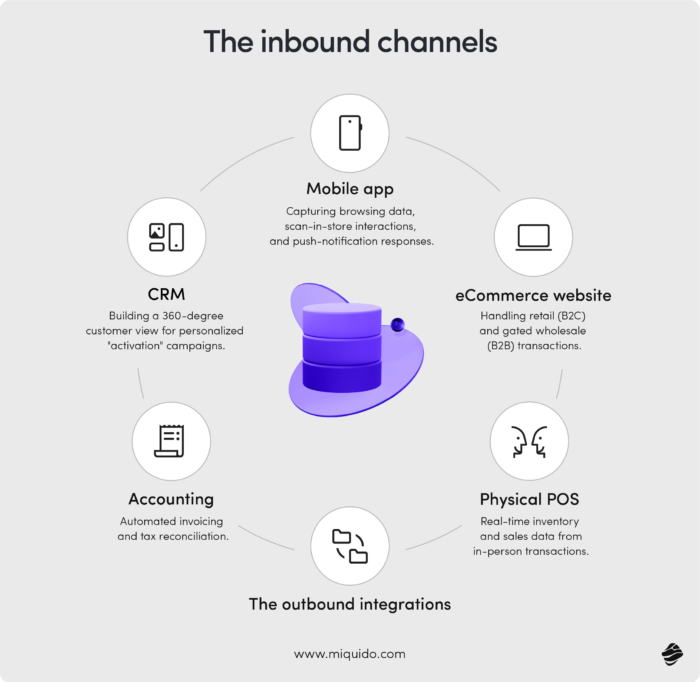
The anatomy of e-commerce integration failure: When the "rework tax" becomes prohibitive
The most significant danger of a fragmented architecture is the "silent break" – the moment an ecommerce integration stops functioning, but the system provides no warning until the damage is done. For many owners, this leads to a state of perpetual "firefighting" where the team is reactive rather than strategic.
One of the most common technical bottlenecks in ecommerce is ghost Inventory. This happens when your ecommerce data integration lacks the speed to synchronize digital and physical reality. If a product sells out in your physical warehouse or store, but the e-commerce integration with your storefront lags by even a few minutes, you risk overselling. The result? Cancelled orders, frustrated customers, and a direct hit to your brand's trust.
The technical debt of poor e-commerce integration
Furthermore, relying on a patchwork of plugins creates an unsustainable "rework tax." Every time an external ecommerce integration platform or a third-party vendor updates their API, your custom workflows might collapse.
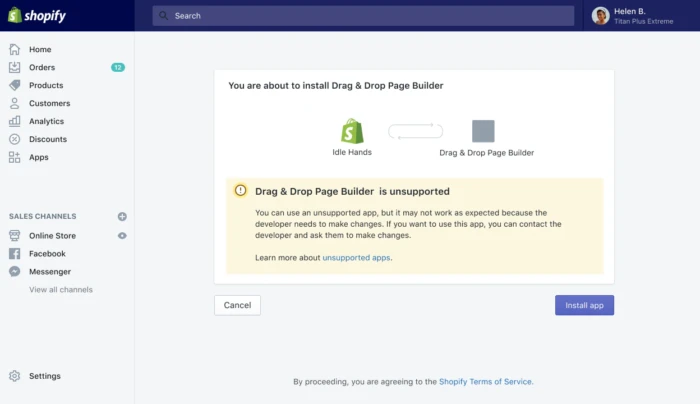
Instead of investing in the best ecommerce software to grow your reach, you find yourself paying developers to fix the same connections over and over again. This technical debt is often the result of not having an integrated ecommerce strategy from day one, leading to a "house of cards" that wobbles under the weight of high-traffic sales events.
The strategic vault: Mastering integrated ecommerce
To move away from this fragility, the modern merchant must view integrating ecommerce as a core architectural decision, not a secondary task. The goal is to create a commerce integration that acts as a strategic vault, where data is accurate, secure, and actionable.
Streamlining operations with ecommerce ERP integration
At the heart of this vault sits the ecommerce ERP integration. By connecting your storefront directly to your ecommerce ERP, you ensure that financial data, tax records, and inventory levels flow through a single source of truth. This eliminates the administrative burden of manual data entry, which often shifts the workload from the sales team to the bookkeeping department rather than eliminating it entirely.
Leveraging HubSpot ecommerce integrations for a 360° view
Equally critical are the Hubspot ecommerce integrations (or your CRM of choice). In the ideal scenario, your ecommerce integration software doesn't just pass order numbers; it feeds deep behavioral data into your CRM.
This allows you to nurture leads based on their actual purchase history across all channels – online, offline, and mobile. When your systems are truly integrated ecommerce environments, you can stop guessing and start automating based on the "big picture" data that drives long-term customer value.
Moving further into the architecture of a unified store, we must address the most personal point of contact for the modern consumer: the smartphone.
The mobile conduit: Integrating ecommerce ecosystem with the app
In the ideal scenario, a mobile app is not a standalone tool but a "data-capture endpoint" that must be woven into the business's central nervous system. For the modern merchant, integrating ecommerce at the mobile level is about creating a real-time bridge between physical behavior and digital records.
Choosing a high-performance ecommerce integration platform
When you deploy a mobile app, it should function as a high-fidelity sensor. Every interaction – whether a customer scans a QR code in your physical store to check stock, uses image recognition in mobile apps you provide to visualize the product or browses a gated B2B catalog on their commute – must feed directly into your integrated ecommerce environment. This ensures that high-intent prospects don't "bounce" due to information gaps, such as seeing a product as available on the app that was actually sold out via a different channel moments ago.
However, the fragility mentioned by many owners often stems from using superficial ecommerce integrations for mobile. Without a robust, custom-built API, you risk creating another data silo where mobile purchase history is invisible to your CRM.
Unifying your ecommerce systems integrations
By utilizing a high-performance ecommerce integration platform, you can ensure that mobile data (like an abandoned cart or a wishlist update) instantly triggers a secure, automated sequence in your ecommerce systems integrations.
This "headless" approach allows the app to fetch real-time data from your ecommerce erp without the bloated code of a generic web-view, ensuring the speed and reliability that B2C and B2B users expect in 2026
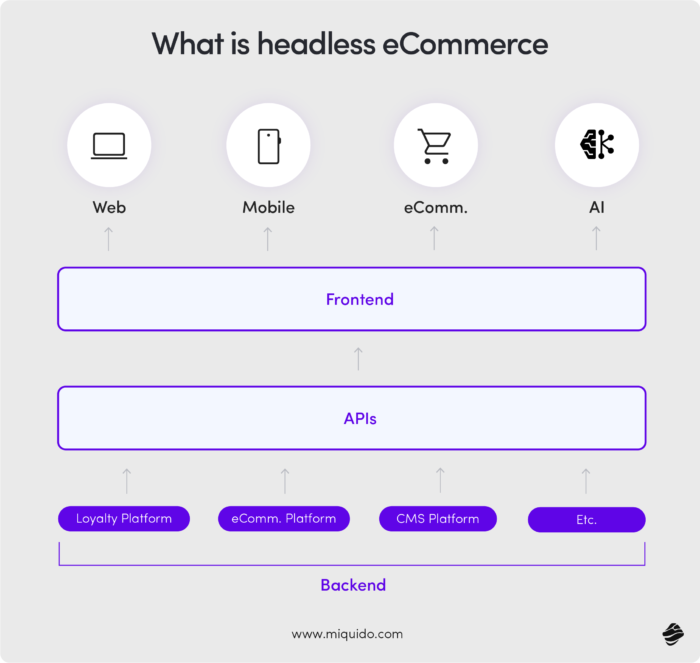
The cybersecurity fortress: Why custom is the "safe way" to carry out ecommerce data integration
For any store owner, the fear of a "buggy" shop is often secondary to the fear of a data breach. Every third-party plugin or unvetted ecommerce integration software you add expands your attack surface. The "safe way" to scale is through an integration-first philosophy where security is a native component, not a premium add-on.
The "safe way" with ecommerce integration software
Custom ecommerce integrations allow for the implementation of hardened authentication and the "principle of least privilege." Instead of giving a generic app broad access to your database, a custom connection ensures that each system – be it for commerce integration or marketing automation – only accesses the specific data it needs.
This is particularly critical when managing sensitive B2B corporate accounts and negotiated price lists, where unauthorized access could expose confidential commercial agreements.
Optimizing ecommerce Salesforce integration and Shopify and third-party tools
Furthermore, a custom-built e-commerce integration allows for manual verification gates and encrypted channels (HTTPS/TLS) that protect personally identifiable information (PII) as it travels between your store, your mobile app, and your ecommerce erp integration.
By moving away from a plugin-reliant ecosystem, you eliminate the risk of a "house of cards" collapse caused by a single vulnerable third-party update. And this can costs millions - take the cases of Stellantis or Toyota, where integrated third-party systems became the gateways for the cybercriminals.
In the world of integrated ecommerce, security isn't just about blocking hackers. It should guarantee the technical resilience that ensures your store remains a "system of interconnected vessels" rather than a fragmented target.
The "silent sync" trap: Why your app and store feel out of step
Many merchants discover the "fragility" of their ecosystem through subtle, frustrating discrepancies. You update a product price on your dashboard, but your mobile app continues to display the old one. A discount works perfectly on the web, but fails at the mobile checkout. These aren't just minor glitches; they are symptoms of a "shallow" ecommerce integration where data is cached or delayed rather than truly synchronized.
The root cause often lies in a reliance on generic "no-code" app builders or middleware that sits too far away from your core business logic. When you rely on a superficial ecommerce integration platform, your app is essentially scraping or polling data rather than receiving it through a live, event-driven handshake. This leads to the "firefighting" reality where push notifications land users on unrefreshed pages, and stock levels become a guess rather than a fact.
The custom approach – while initially more time-consuming – replaces this guesswork with a "single source of truth." By building a custom API layer, you ensure that every update in your ecommerce ERP is broadcasted instantly across all channels. It moves your operation from a "poll-and-wait" model to a "push-and-sync" model, ensuring that digital and physical reality remain perfectly aligned.
Beyond the "house of cards": Embracing headless resilience with Medusa.js
For developers and owners who have felt the hell of building complex e-commerce features from scratch, the temptation is often to retreat back to the safety of all-in-one platforms. However, there is a middle ground that provides the security of custom architecture without the need to reinvent every wheel: headless commerce.
Frameworks like Medusa.js represent the next generation of best ecommerce software. Unlike rigid platforms that force you into a specific way of working, Medusa is built for ecommerce data integration from the ground up. It provides a highly modular, "plug-and-play" backend that allows you to swap out or add ecommerce integrations – like specialized energy management tools or complex IoT data feeds – without breaking the core checkout logic. Once you want to add new features like gamification in retail or B2B commerce workflows, you don't need to worry about interfering with the existing code.
This is the approach we took at Miquido when developing a headless solution for a scaling energy startup. By utilizing a headless architecture, we were able to build an integrated ecommerce environment that handled both standard retail sales and complex, real-time data from energy devices.
This "integration-first" philosophy ensures that even as you expand to more platforms (like Amazon or specialized B2B portals), your ecommerce integration software remains stable and performant. You transition from a "house of cards" that requires constant rework to a fortified, high-performance ecosystem that is truly integrated ecommerce at its best.
A roadmap to a fortified future with best ecommerce software
Moving from an "isolated island" to a unified ecosystem is the only way to escape the cycle of firefighting and manual data entry. While custom architecture requires a higher initial investment, it is the only way to build a sustainable brand that won't break under the weight of scaling.
By adopting an "integration-first" philosophy and leveraging frameworks like Medusa.js, we can set up a headless solution tailored for hassle-free growth. This approach ensures your integrated ecommerce environment remains resilient, securing your data while nurturing long-term customer value. Ultimately, the true ROI of a secure, custom-built store is the peace of mind that your technology is a launchpad, not a bottleneck.

Top AI innovations delivered monthly!
The administrator of your personal data is Miquido sp. z o.o. sp.k., with its ... registered office in Kraków at Zabłocie 43A, 30 - 701. We process the provided information in order to send you a newsletter. The basis for processing of your data is your consent and Miquido’s legitimate interest.You may withdraw your consent at any time by contacting us at marketing@miquido.com. You have the right to object, the right to access your data, the right to request rectification, deletion or restriction of data processing. For detailed information on the processing of your personal data, please see Privacy Policy.


![[header] fintech super apps lessons from miquido’s development playbook](https://www.miquido.com/wp-content/uploads/2025/08/header-fintech-super-apps_-lessons-from-miquidos-development-playbook.jpg.webp)