AI-Driven Software Delivery
AI-driven engineering with human-owned quality
LLMs write code in minutes, but knowing what to build and proving that it works still takes people. Every stage passes defined review gates: you approve the scope, see each change priced upfront, and own everything we build.
See how we’d run your project


The challenge with AI-built software
Coding agents build a working feature in minutes, but wherever the specification is vague, they fill the gap with a guess instead of a question.
Without senior review before every merge, that speed turns into technical debt within weeks, and the codebase gets harder to change with each release. Meanwhile, small scope changes slip into the build without anyone signing them off, and you only find out when the budget or the deadline moves.
Every one of these risks traces back to the two steps around the code, and that's where Miquido changed how delivery works.
What has changed?
“The middle of the lifecycle – the code – is the part that got cheap. What's left at the two ends is a specification good enough for a machine to build from, and proof that what came out is right, maintainable and safe. An agent won't ask you at standup which requirement it should believe, it will guess. That's where the human work went.”

Piotr Polus
Head of Technology
The shape of the work inverted
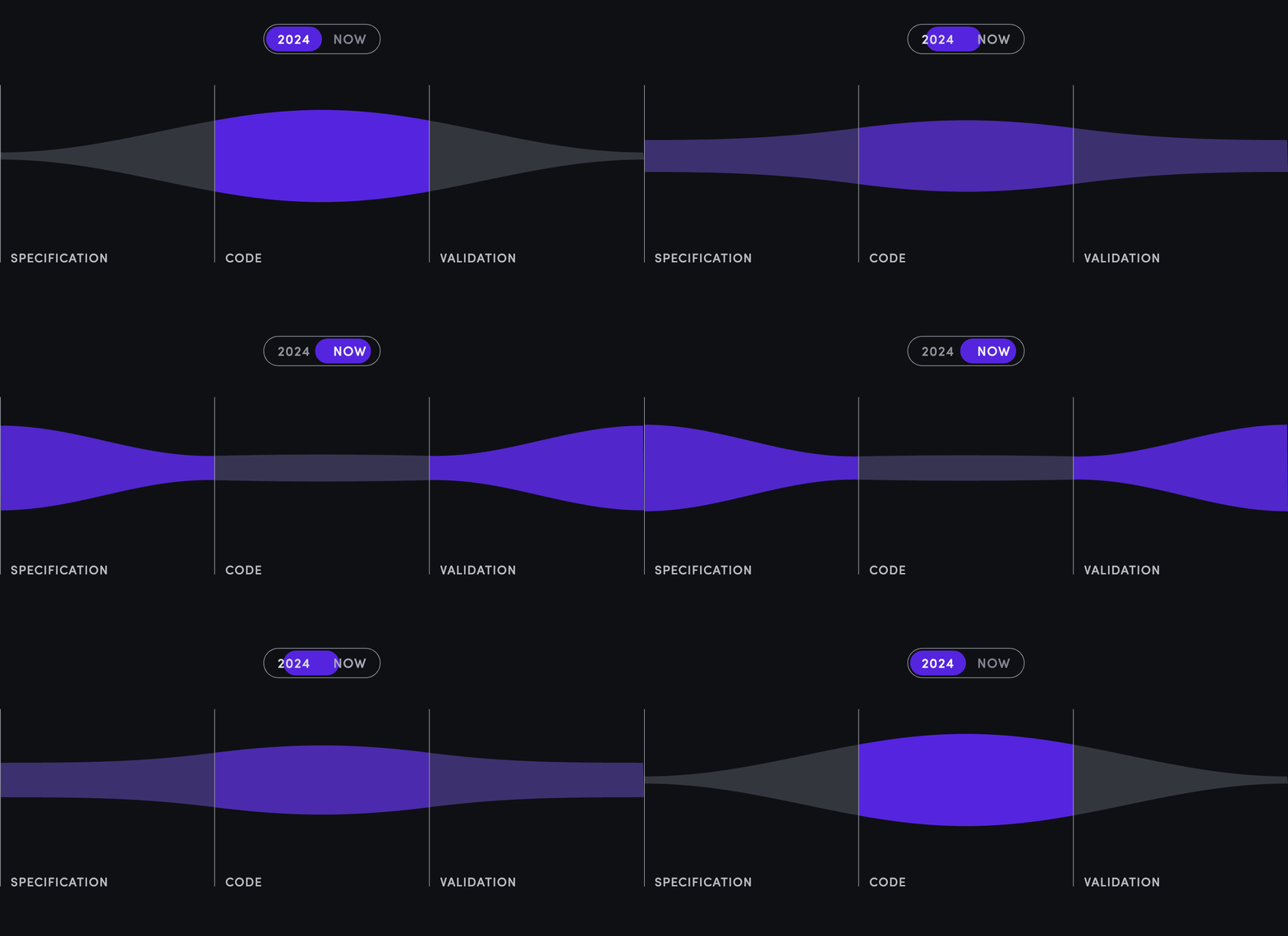
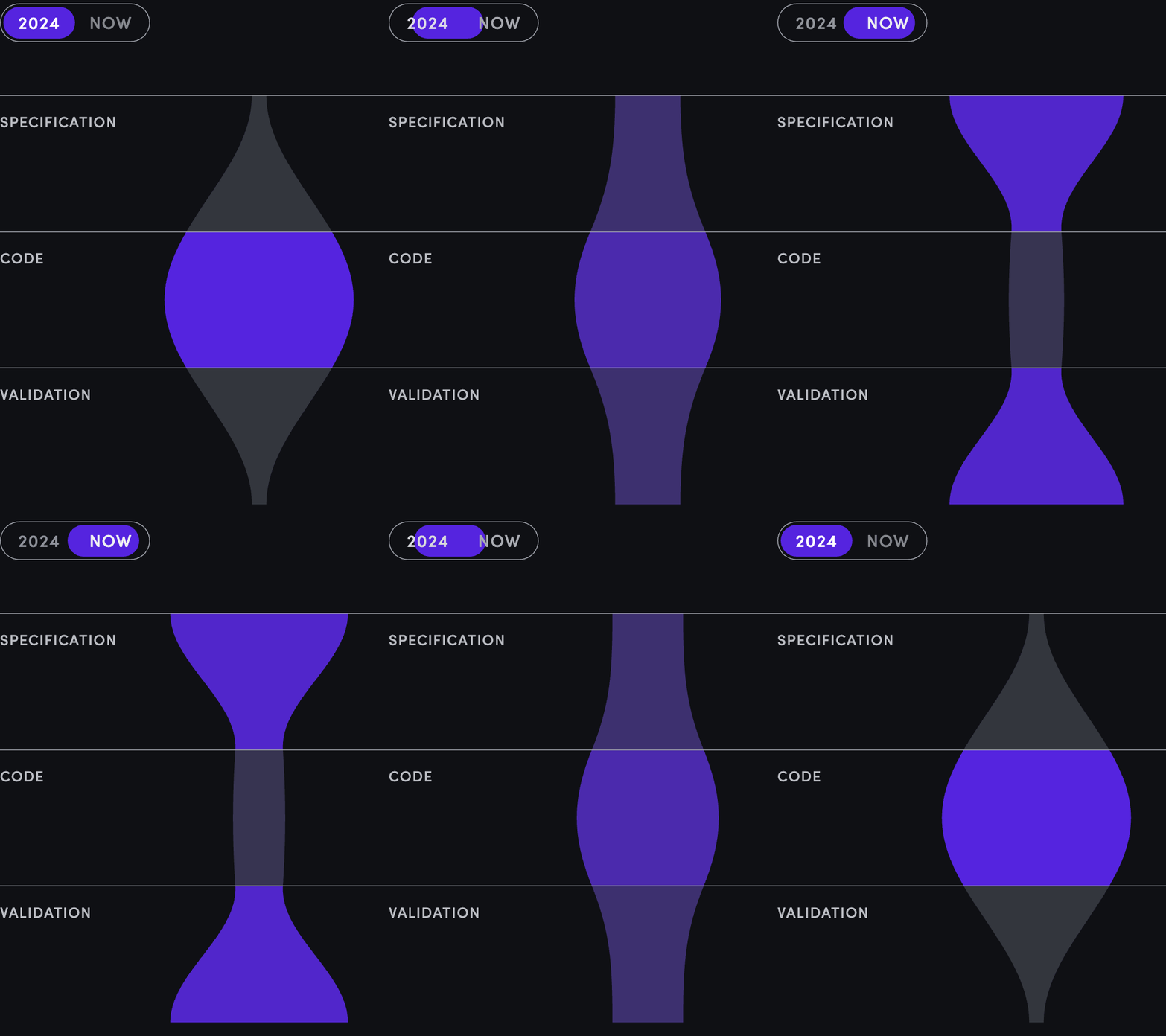
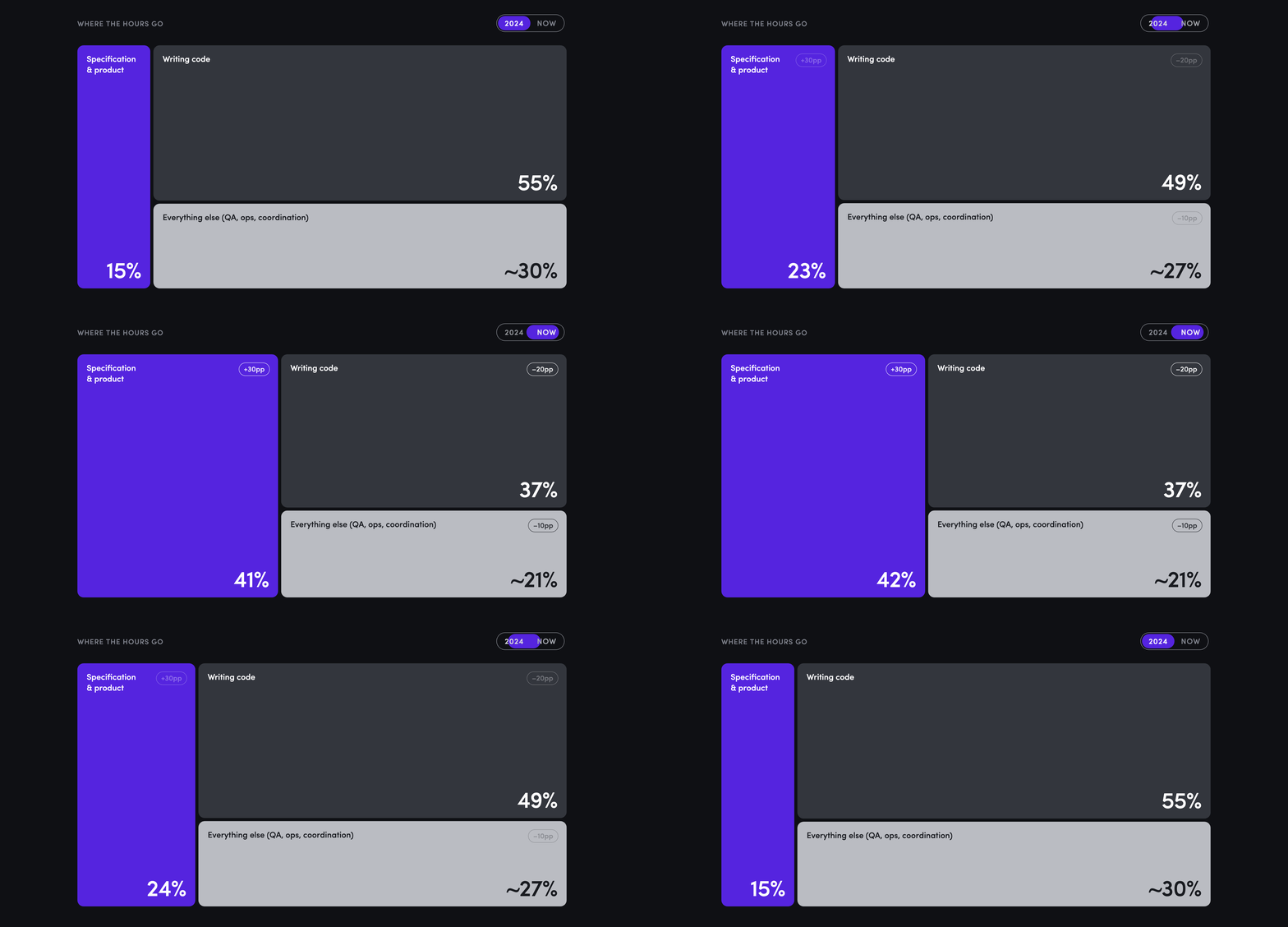
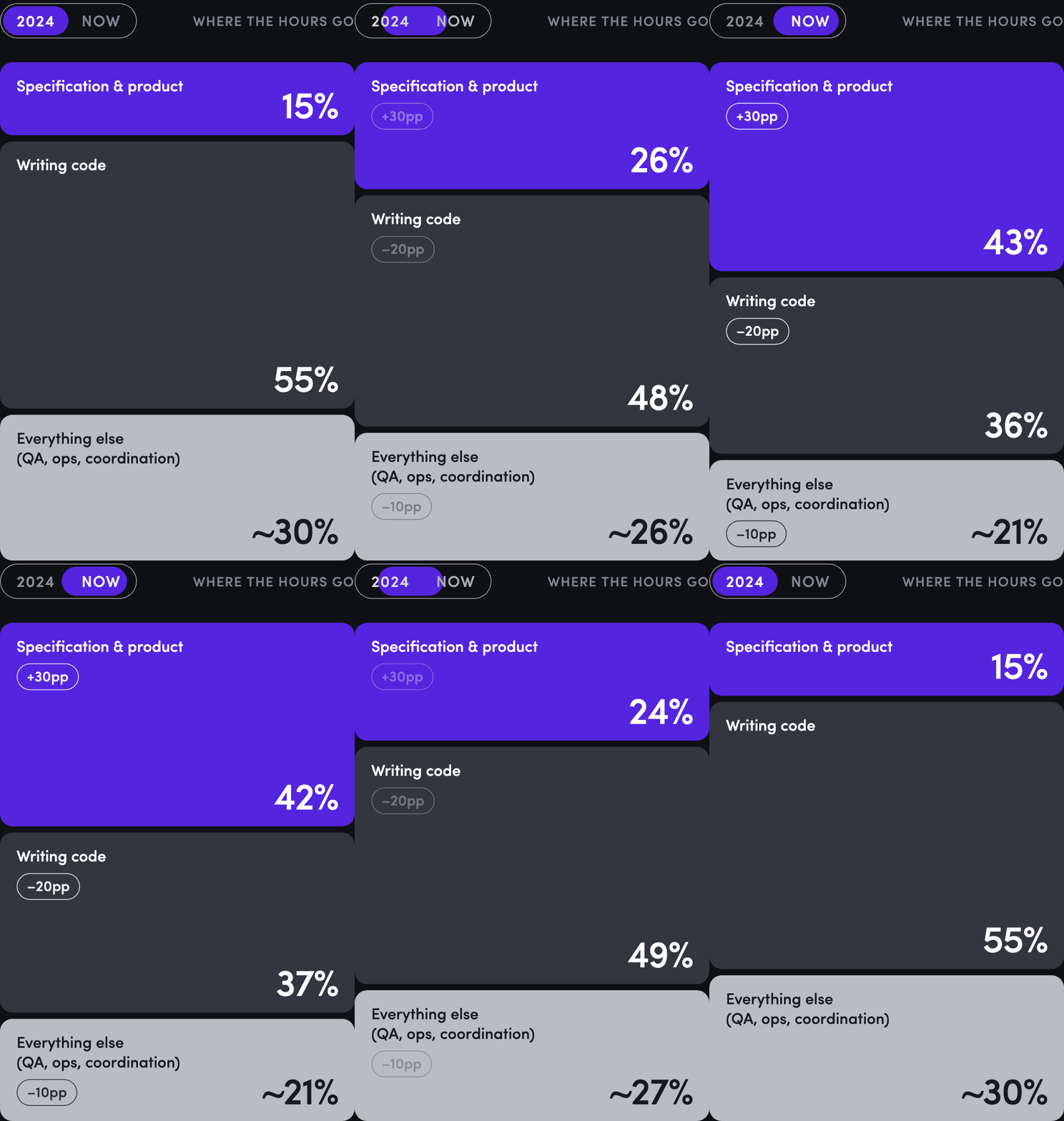
The middle used to be wide and the ends narrow. Now the thinking lives at the ends, and the middle runs as a machine step between them. Most AI delivery stories on the market still talk about the middle, while we focus on the specification and validation parts of the process.
Inside our delivery model
Putting people at both ends of the process changes what you get as a client, and you can check each of these on your own project.
Book a 30-minute discovery call
Reliability you can verify
Every design decision, line of code, and ticket on your project derives from a single specification, so nothing drifts on its own.

A budget that moves only when you decide
Scope is fixed in a Short Spec attached to the contract, and every change is priced before it goes in.

Senior review of every line
Senior engineers review and merge everything an agent writes on your project, keeping quality and technical debt in check.

A smaller team, the same ownership
What used to take nine people to run now moves through a pod a third of the size, with the same accountability built in.

A full audit trail, not a black box
You get a log of every agent action on your project: what ran, what changed, and who approved it.
1 of 5
One spec runs the whole project
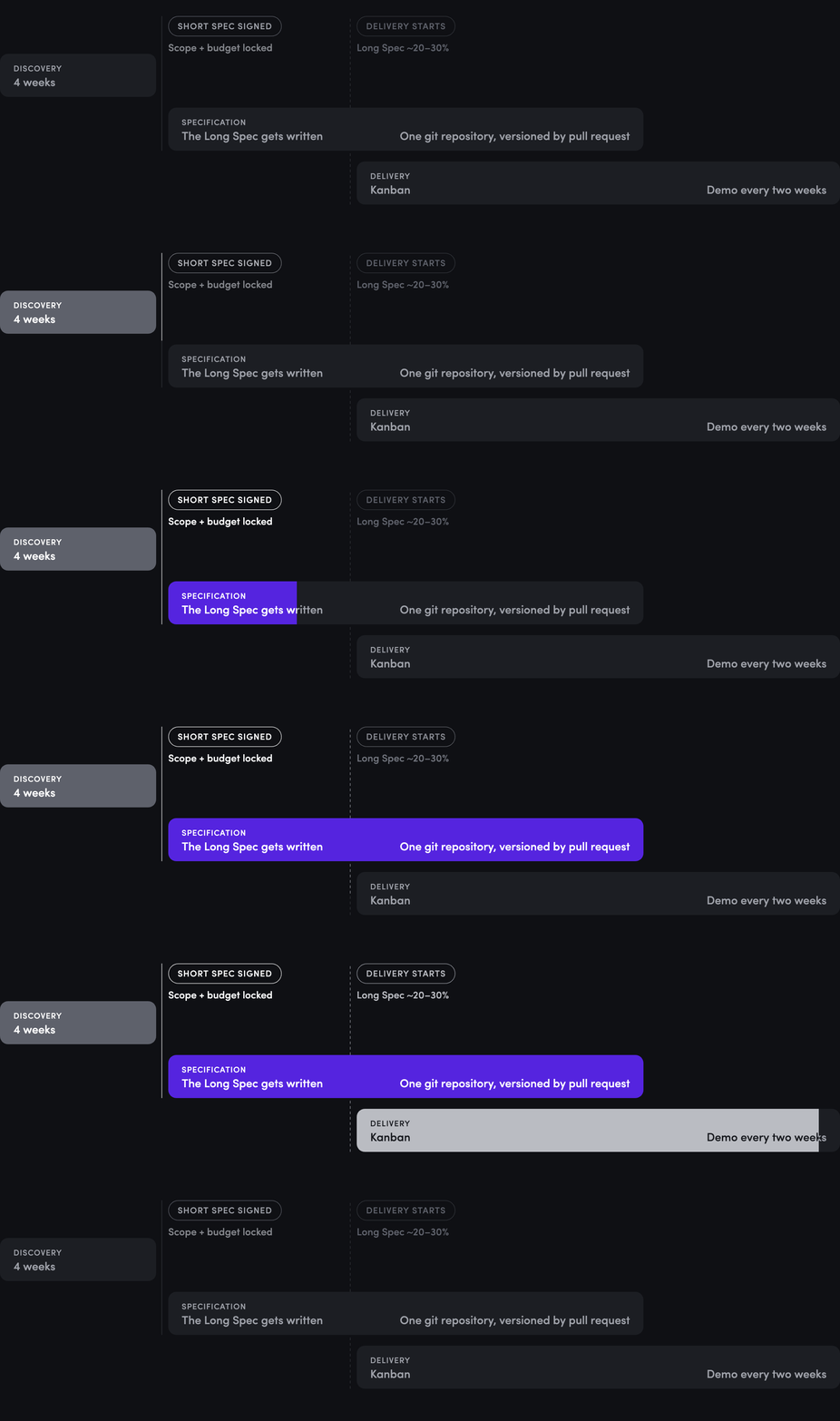
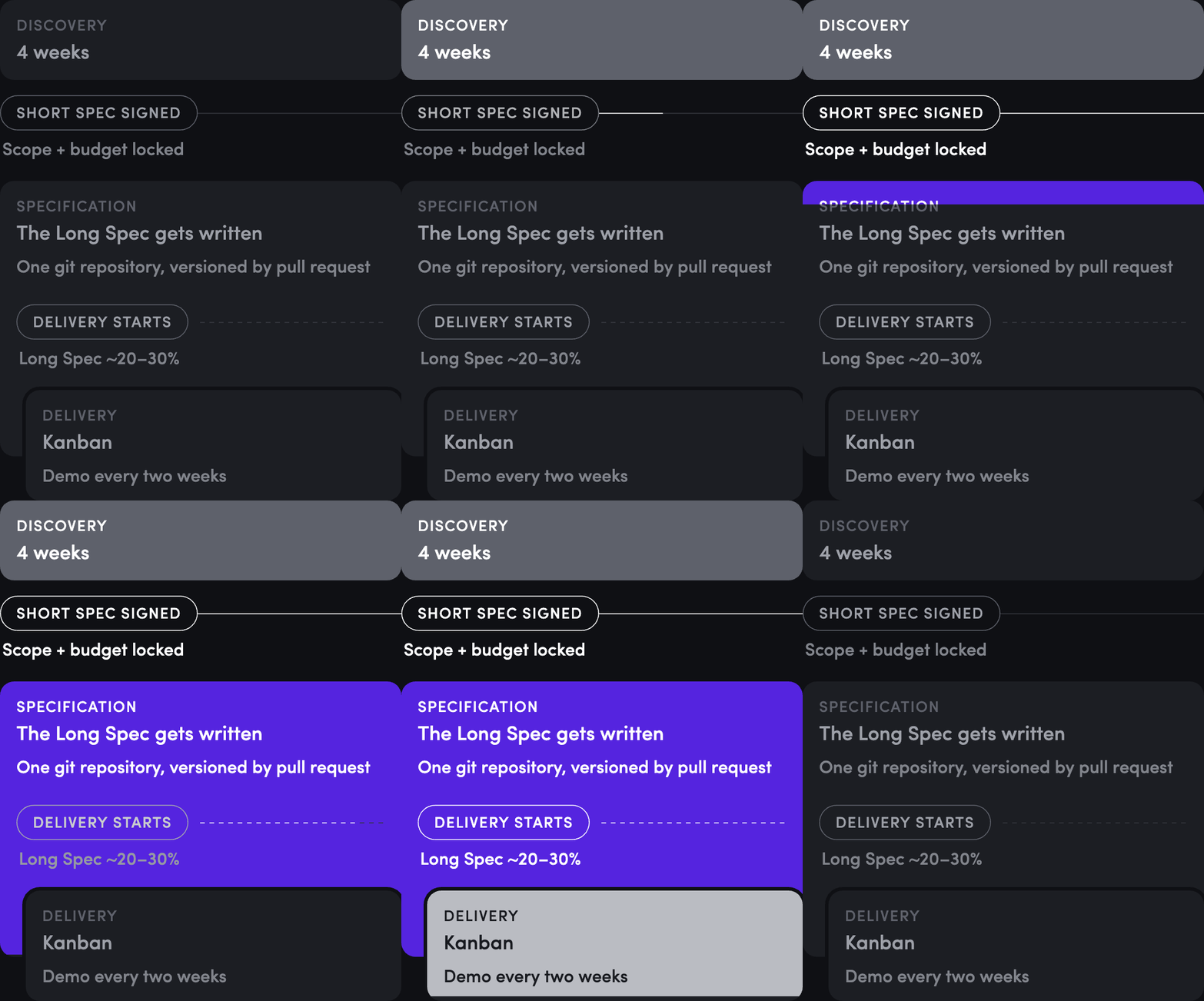
We run every project in three phases, and all of them feed one document. Jira and Figma stay in use, but neither of them decides what gets built.
Before the engagement even starts, you get:
A draft of your team and agents
Tell us about your product, and we'll email you the pod we would put on it. You'll see who works in each phase, when engineers join, and which skills from our library support them. Every skill has a named owner at Miquido, so you know who answers for it.
A planning interview in your own AI assistant
Run our interview skill, answer a few questions about your product idea, and see how we would build it.
Use cases from live projects
See how our superagent and skills work on real products. Each case shows what the agent does, which tools it can reach, and where a person makes the call. You'll know exactly which work an agent does and which work people own.
1 of 3
How one change gets made
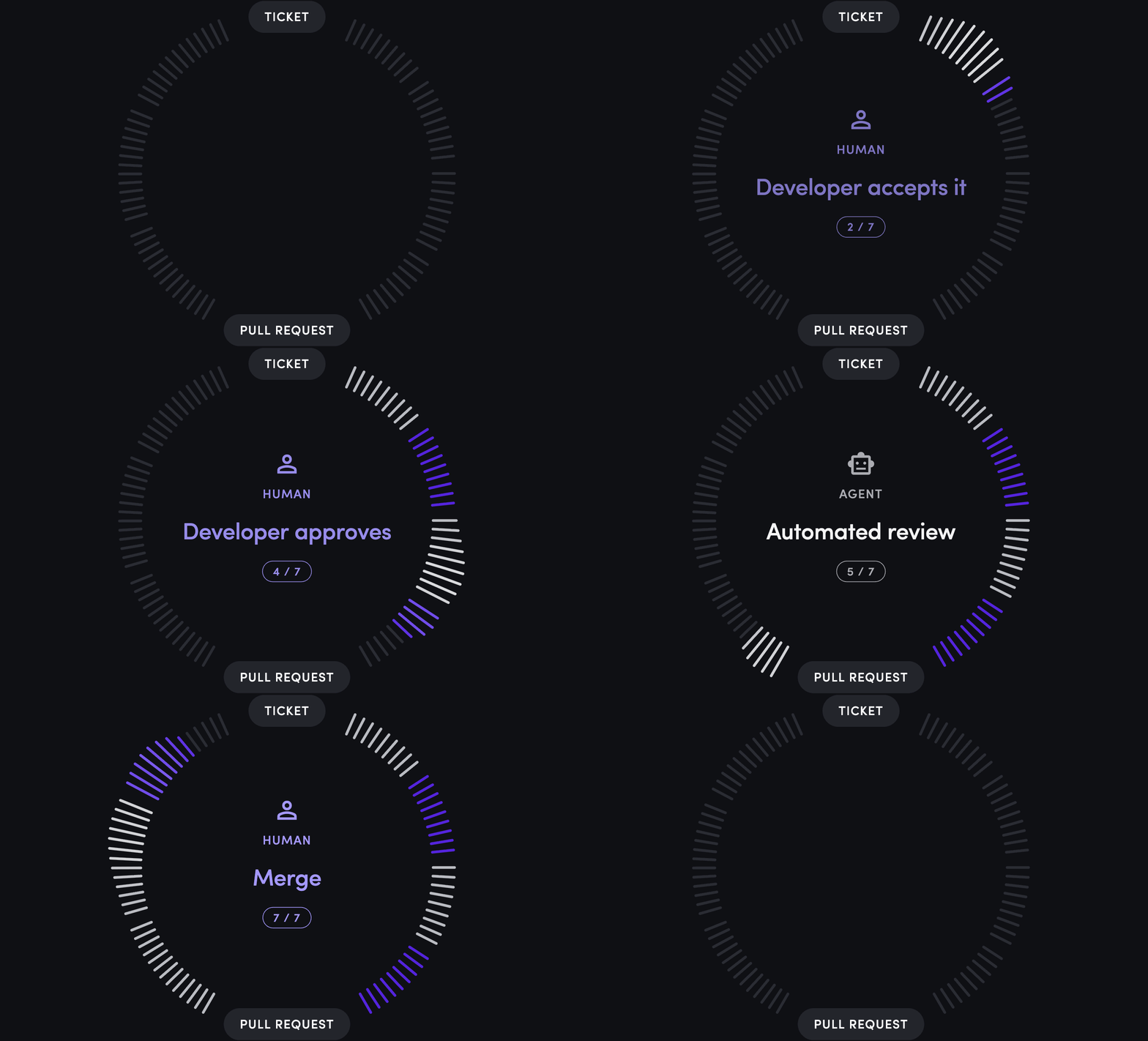
Every change passes six gates, and a person makes the call at two of them. The developer defines the plan, the agent works out the steps, and nothing runs until the developer approves them. Before anything is merged, the developer checks the result and takes responsibility for the code.

Our process

Discovery
Discovery takes whatever form the product needs, and we transcribe every conversation. It ends with a signed Short Spec that locks scope and budget. On one current project, it runs to 103 lines and is attached to the contract. You can still change things later, and each change is visible and priced.
Specification
The Long Spec breaks the same scope down, story by story, into acceptance criteria, flows and open questions. It goes into enough detail for code to be generated straight from it. It lives as plain text in a git repository, where every change is versioned and reviewed like code. Anything missing from it doesn't get built.

Delivery
Development starts once about 20–30% of the Long Spec is ready, so nobody waits for the full document. From then on, both phases run side by side and feed each other. We work in Kanban and demo working software every two weeks. Before any code is merged, a developer approves the plan and reads the diff.
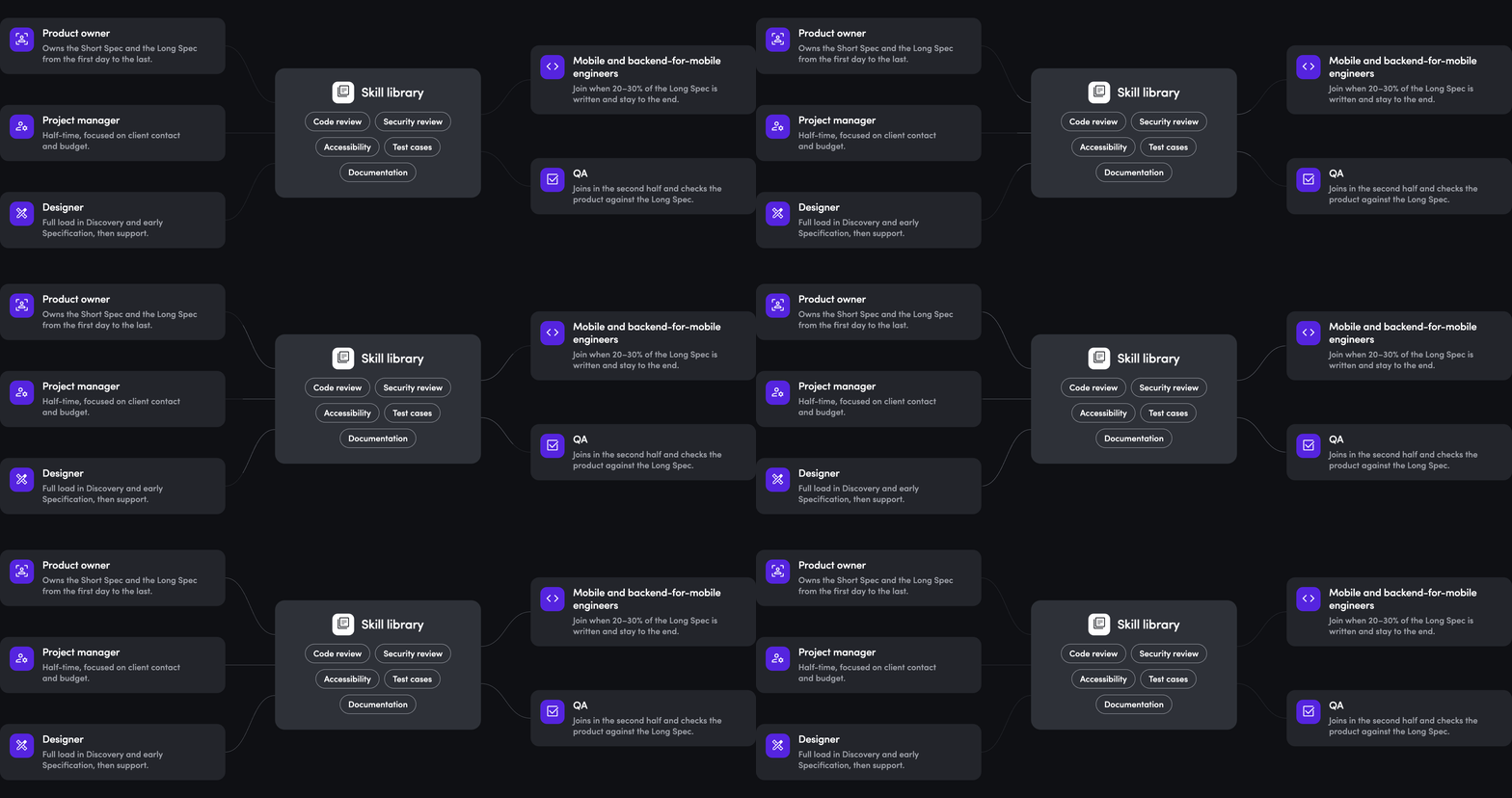
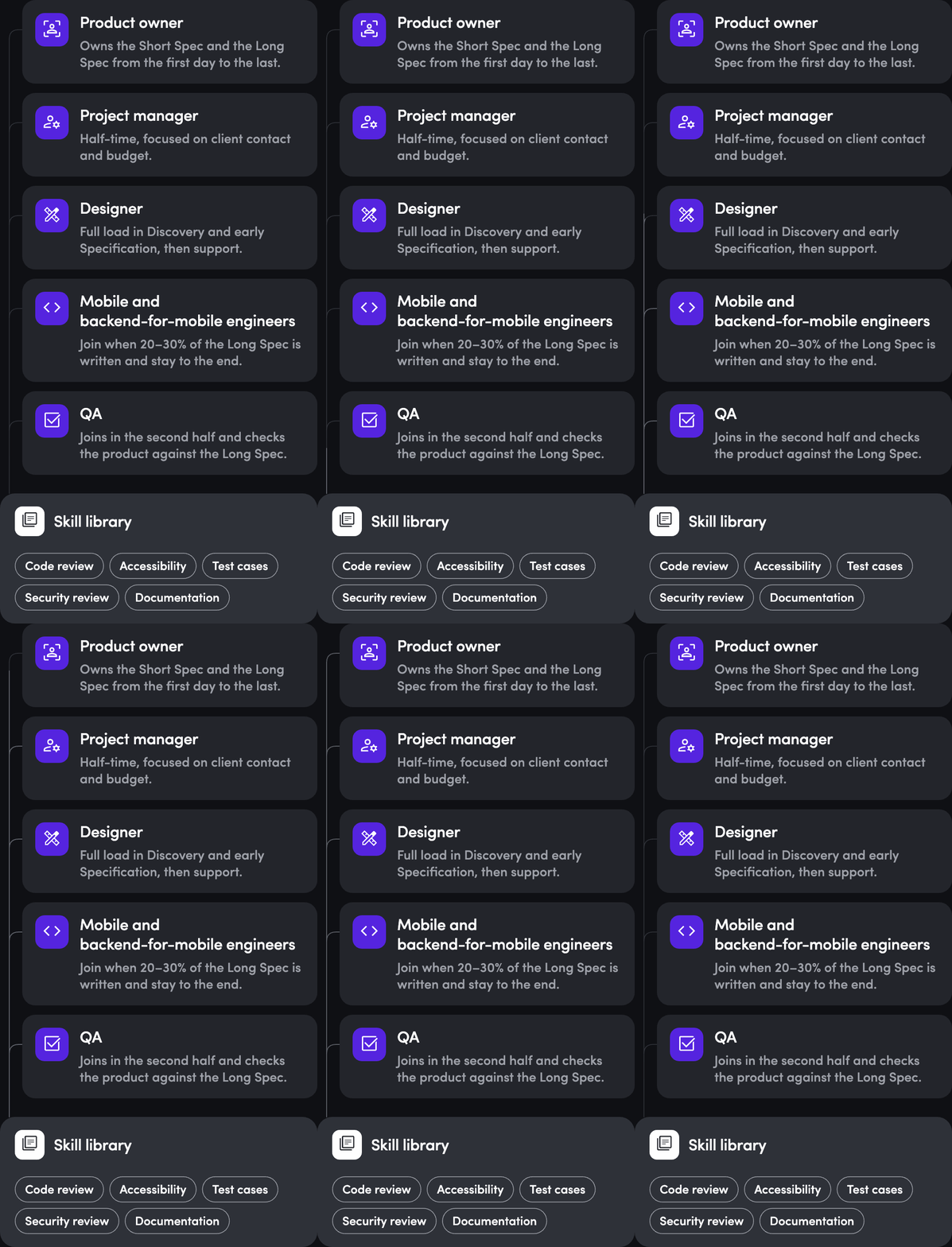
Who's in the senior pod
You pay for the phase, and the team adapts inside it.
Two years ago, a mobile product took nine people for the full duration. Today it takes one pod of about 3.5 full-time equivalents plus our skill library. The pod's composition changes every few weeks as the work moves from one phase to the next.
Choose how we work together
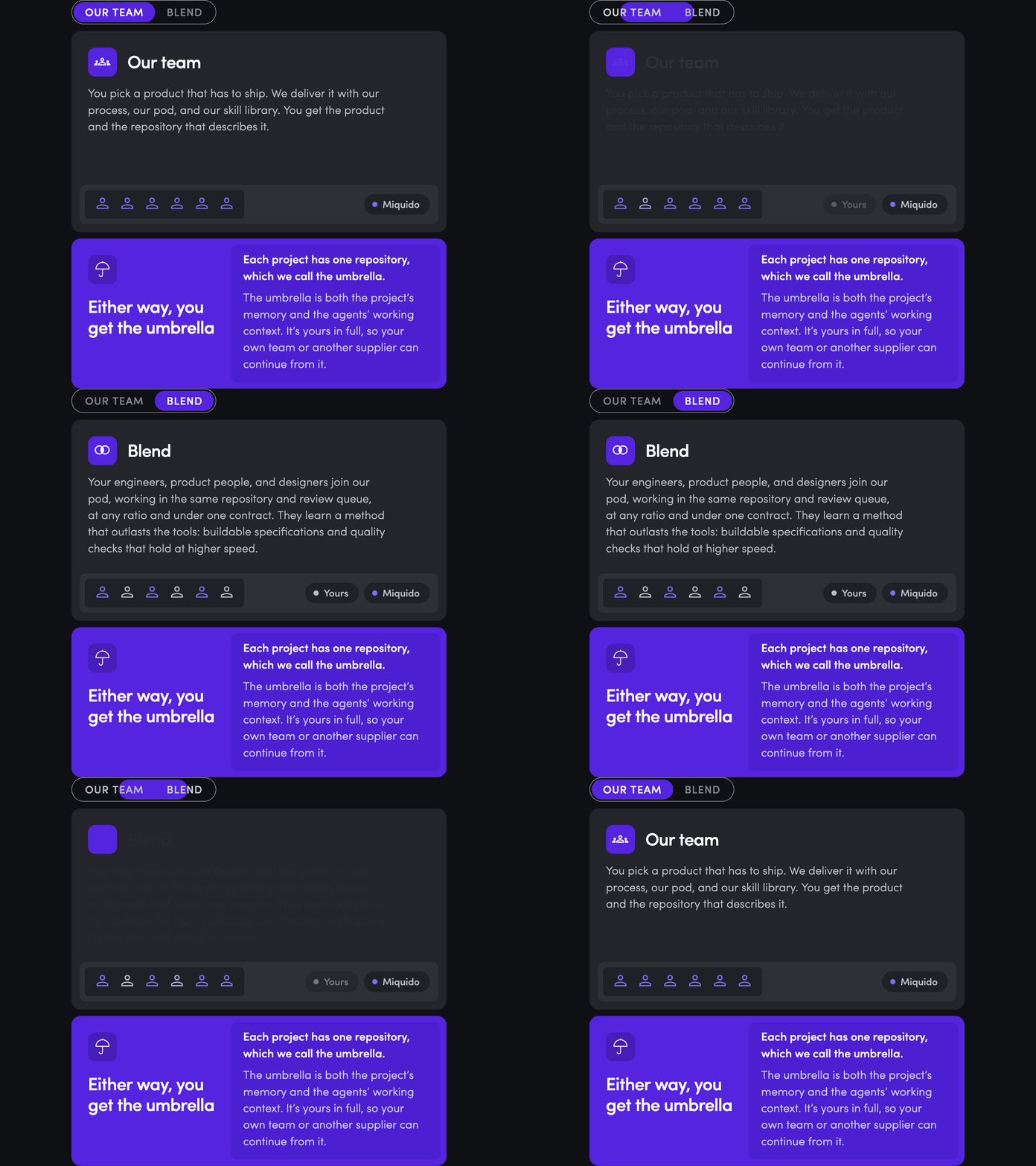
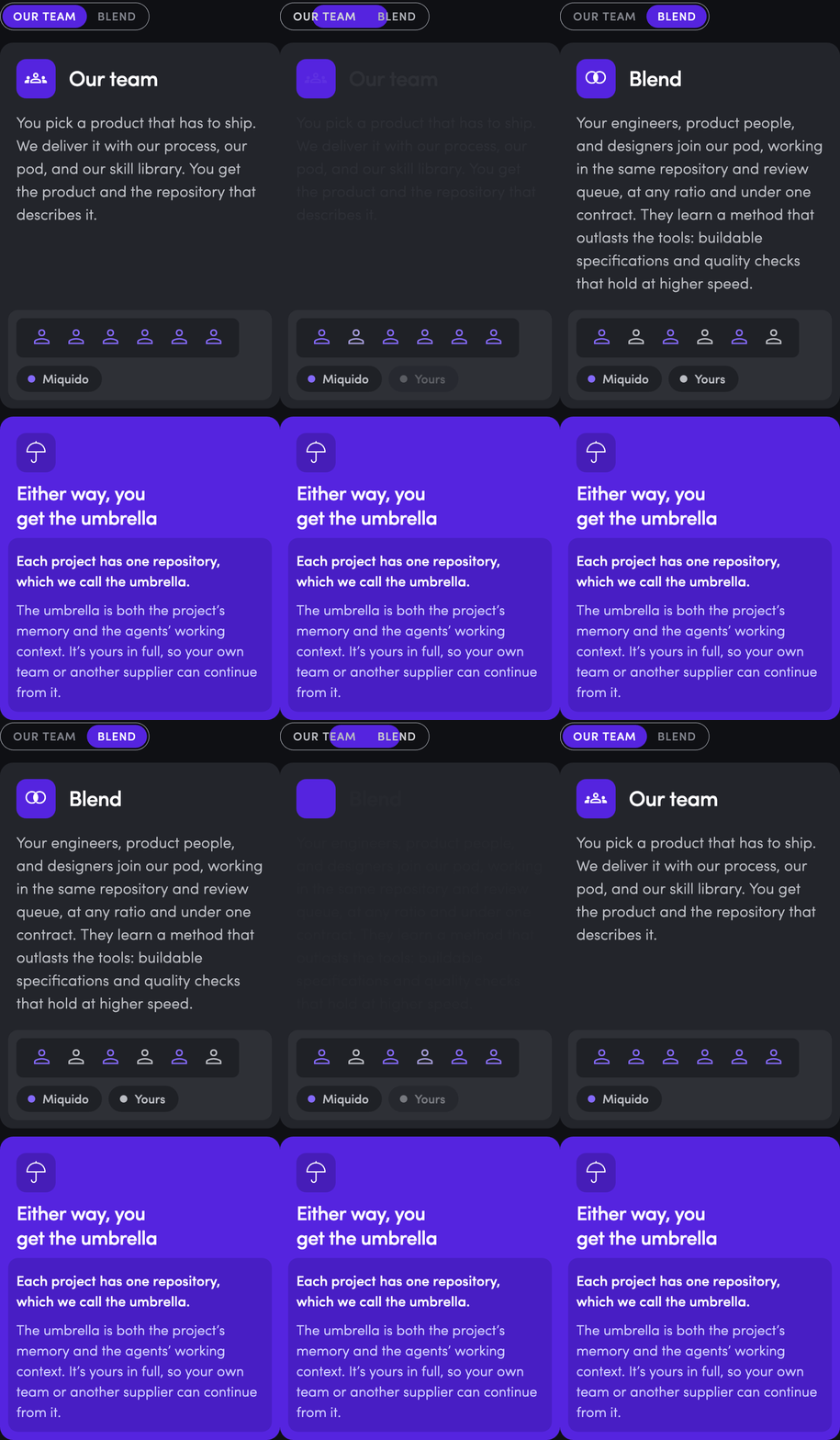
Changing how a large organisation builds software is expensive and risky, and every failure happens in public. We've already made that change at Miquido, including the parts that didn't work. You can use that experience in two ways.
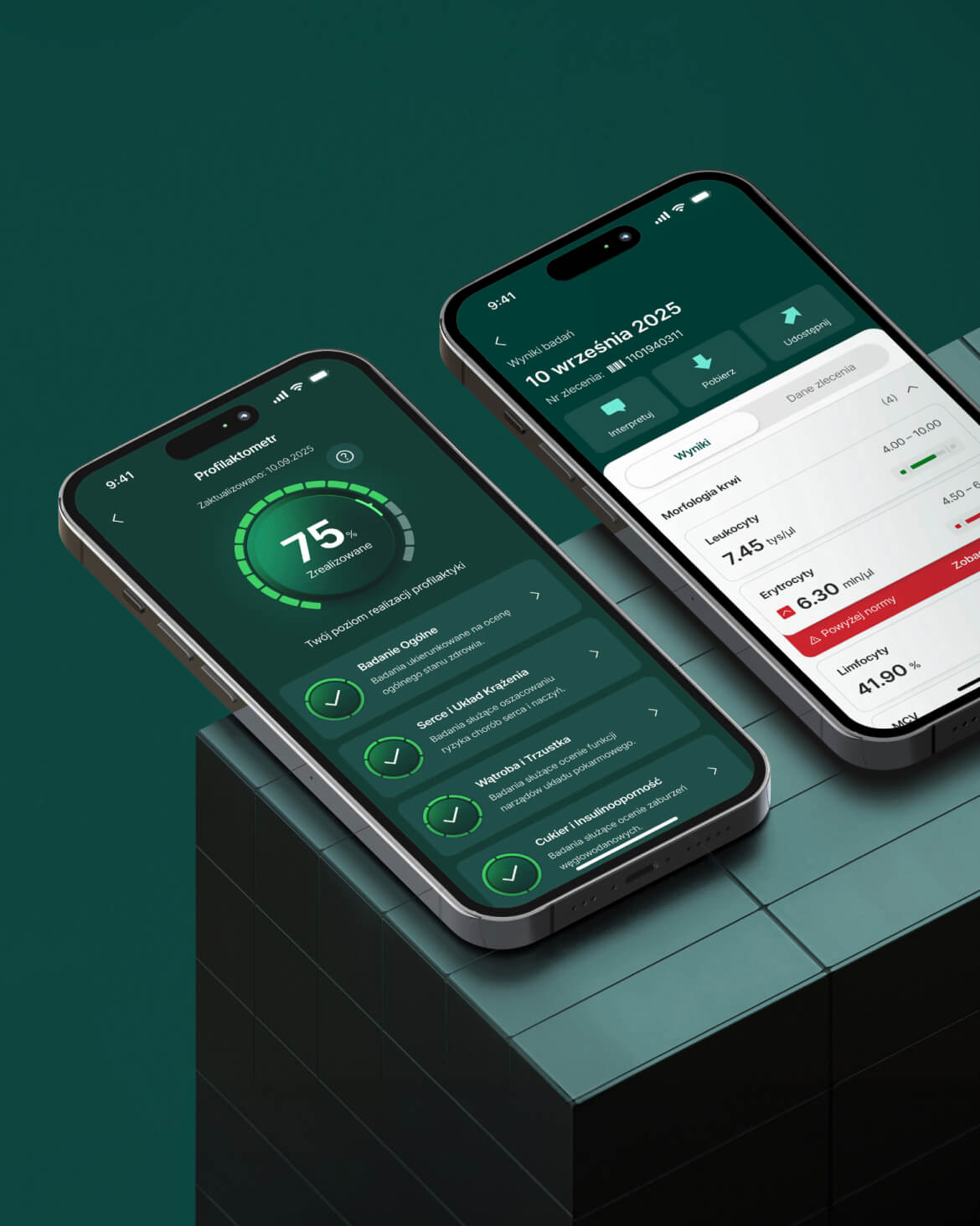
See our engineering in action





Available for projects
Build with AI and stay in control
Our AI agents write most of the code, and experienced engineers approve every plan and every change before it ships. You get a product built from a specification you signed, with scope, budget, and quality you can check at every step.