
 13 Apr 2026
 47 min read
The mobile app development market is highly competitive, meaning your application must be spot-on and bring real innovation to stay ahead of the game. But it's no piece of cake: it is becoming increasingly harder to maintain consistent quality across interfaces with the ongoing technological advances.
The popularization of GenAI is also changing the game, setting new standards for how users access and process information and interact with their mobile devices. As much as excellent app performance, your user increasingly often expects an experience And while consumer demand for mobile solutions is higher than ever, so is the digital noise and competition at app stores.
What will be next - the foldable smartphones? New, even more advanced context aware applications? The big comeback of instant apps? Further expansion of beacon technology? Hyperpersonalized on demand apps with advanced features we have not seen so far? Or maybe - nostalgia and higher focus on sensitive data protection?
Discover the latest trends in mobile app development and create apps that captivate audiences with their future-proof approach.
30 current trends in mobile app development
These top mobile app development trends have been on everyone’s lips in recent months.
GenAI: the future of mobile app development is hyperpersonalized
Artificial intelligence (AI) and machine learning (ML) have become essential tools for mobile developers who want to create engaging, user-centric experiences. Personalization, which has evolved into hyperpersonalization, is one of the areas in which GenAI gives outstanding results at the fraction of costs. Suggested content has morphed into Liquid UI—interfaces that adapt their color, density, and layout to the user's specific psychology.
While "serious" sectors like banking once feared visual flexibility might look unprofessional, those boundaries are melting. As users grow accustomed to hyper-personalized Android and iOS system themes, they expect their apps to mirror their identity. The "visual mirror" is becoming a trust signal, not a risk.
#1 Personalized insights and charts
AI and ML allow mobile apps to analyze user data (search history, purchases, app usage, etc.) to recommend content, products, or services relevant to each user. As a user yourself, you know this mechanism very well from social media. You’ll see this play out on top social media apps like Instagram– the average user is scrolling through the app and “stumbles” upon suggested posts they happen to like.
Personalized insights and charts bring it to another level, providing additional value to users, whether individual or business. They can adopt different shapes and dynamics depending on app's specifics, helping users understand their decisions or results better.

Personalized charts were one of the essential aspects of Miquido's mobile app for Diagnostyka, helping users understand their blood test results through simple visual aids. These charts help to put the evolution of the results in perspective, supporting patient care and facilitating the detection of patterns that could be overlooked otherwise.
#2 Personalized UX path and dynamic UI
GenAI is now used to dynamically adjust the user interface and flow. Mobile app developers are integrating AI to anticipate the user's next action and present the necessary elements upfront. Behavioral data you gather over time within the app and your whole ecosystem can further improve the accuracy of personalized content and interface dynamics. But make sure you start from scratch, by giving your users agency at the onboarding stage. A simple survey is usually enough to launch a hyper-personalized setup.
This can be particularly value-adding in B2B apps, where unnecessary elements of the interface can affect work performance and should correspond with the specific roles. But not only - the consumers and individual users will also appreciate this adjustment. They may not even be conscious other users are experiencing your interface in a different way.
Why mobile apps can bring your personalization efforts to the next level?
Unlike desktop, mobile personalization opens up entirely new possibilities — it can tap into real-time context through on-device sensors like GPS, accelerometer, and even camera data to deliver hyper-local, situationally aware experiences. This enables instant, deeply personalized interactions that adapt to where the user is, what they’re doing, and even how they’re moving.
However, it also introduces unique challenges: balancing responsiveness with battery efficiency, respecting privacy while processing sensitive sensor data, and ensuring seamless performance despite variable connectivity and limited screen space.
#4 Gen-AI driven personal virtual assistants
The adoption of AI and ML goes even deeper— healthcare, education, fintech, tourism, entertainment, e-commerce all benefit from its capacities of supporting customer service and access to information.
AI-powered chatbots often provide 24/7 customer support within apps. These chatbots can answer user questions, resolve issues, and complete transactions with little to no need for human intervention.
With its natural language capacities, GenAI removed the friction that the older solutions would often generate - chats became more human than ever since they recognize user emotions and tune in with them. The limited predictability of the conversation is no longer an issue either - ai powered user experiences do not rely on the predefined scenarios.


The next step is the multimodal chatbot - an assistant that can process a video of a product issue, a photo of a damage or an item to identify in the shop, resolve an issue based on a voice description, and so on. Not only does it make the customer service experience seamless - it also acts as a data funnel, gathering precious material for analytics and resolving efficiency or retention issues.
Unlike desktop, which can offload heavy processing to the cloud with stable connections, mobile assistants must rely on smaller, optimized models run on the device's specialized neural engines (NPUs) to ensure zero latency and full offline capability.
#5 AI agents vs. mobile interfaces
User habits are already shifting from manual navigation and searching to intent-driven commands, decreasing the need for traditional button-clicking in favor of conversational interfaces that focus on delivering outcomes.
The AI and GenAI integration efforts may transition from providing feature-specific assistance to driving autonomous AI agents that complete multi-step tasks across apps, fundamentally changing the user-app relationship. However, a significant psychological barrier to agentic AI remains: the human need for visual certainty.
While "Zero-UI" (voice/gesture only) is technically possible, research shows that humans are inherently visual creatures who suffer from a "psychological vacuum" when high-stakes processes are invisible. According to Deloitte (2025), when AI agents make financial errors, 58% of consumers immediately revert to human/visual interfaces.
In Europe especially, users demand a "visual anchor"—a real-time receipt or dashboard—to feel in control. Total "invisibility" erodes trust. That is why, we the future isn't the death of the UI, but the UI serving as a transparency layer for invisible decisions.
AR/VR technology: Perfect for mobile-first value added features
Augmented Reality (AR) and Virtual Reality (VR) are no longer futuristic concepts; they are rapidly becoming integral components of the mobile landscape. While often grouped, they serve different purposes.
VR immerses app users in a completely digital world, typically requiring a headset. AR, on the other hand, overlays digital information onto the real world and is perfectly accessible through the smartphone in your pocket. Both technologies aim to blend the physical and digital, creating interactive and seamless user experiences that are redefining engagement.

#5 Immersive commerce and virtual try-ons
For industries like e-commerce and retail, AR is a game-changer. Mobile apps can now offer 3-dimensional product visualizations, allowing customers to see a new sofa in their living room or try on a pair of sneakers virtually before buying.
This not only enhances the shopping experience but also significantly reduces return rates, a major pain point for online retailers. Using a smartphone camera, users can simulate real-life scenarios, bridging the gap between online browsing and tangible interaction. These virtual try-on solutions build purchasing confidence and create a stickier, more memorable brand experience.

#6 Interactive and gamified learning
In the education sector, advanced technologies of AR and VR are transforming passive learning into an active, engaging process. Imagine a medical student exploring a 3D model of the human heart through their tablet or a history class taking a 360° virtual tour of ancient Rome.
These applications turn abstract concepts into tangible, interactive learning materials that can dramatically improve knowledge retention. Gamified learning modules, accessible through mobile apps, make education more enjoyable and effective for users of all ages, from K-12 students to professionals undergoing corporate training.
#7 Gamified shopping experiences with AR
Gamification is a strong trend among leading retailers globally. Mobile devices paired with AR create perfect conditions for this trend to emerge, and allow companies to stand out without involving discounts and other traditional strategies which could affect their finances.
Big retailers and franchises borrow the mechanisms we known from gaming apps to incentivize shopping online and offline.AR/XR function might facilitate diversifying income and is a magnet for alpha generation, raised with mobile-first user preferences and used to games.
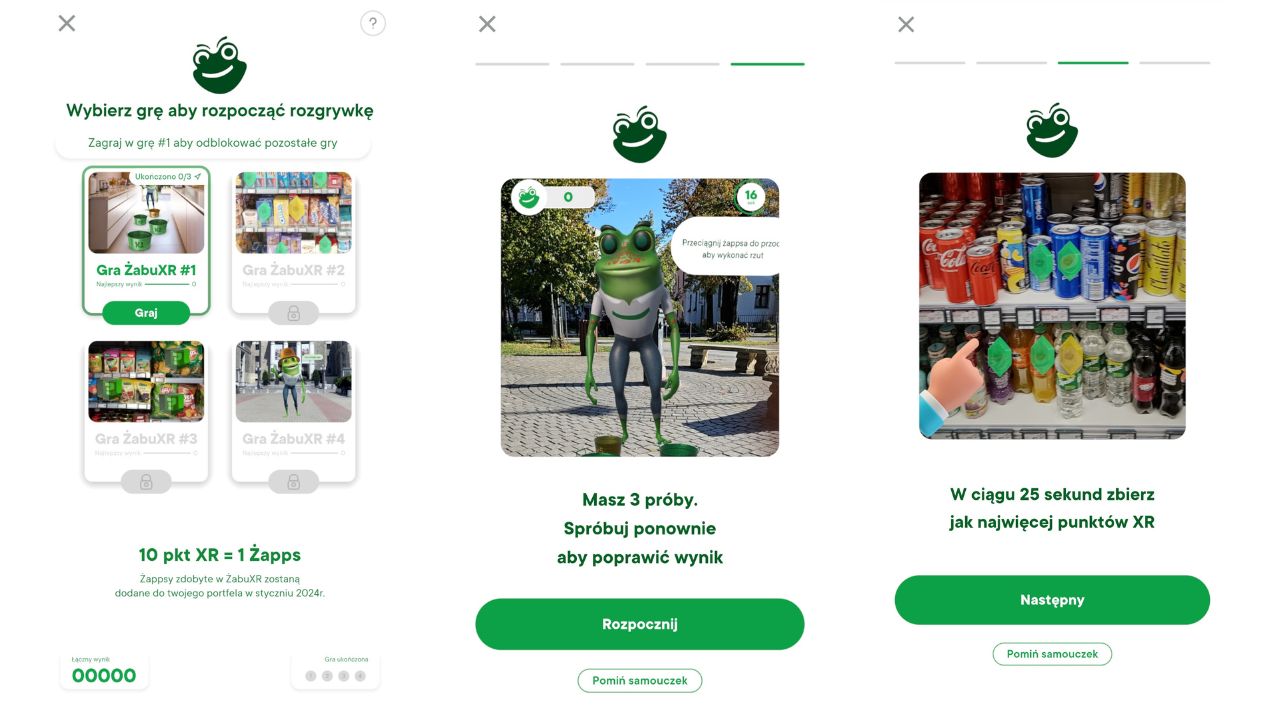
Examples? The Polish franchise network Żabka has been heavily investing in gamification strategies for several years now. Its mobile game Żabu, available in the Żappka app, offered XR (extended reality) scenarios, allowing users to have fun both at home and while shopping in-store. Interaction with virtual characters and products enabled players to earn points and compete with one another.

Why is mobile the natural home for AR?
While high-end VR requires dedicated headsets and powerful PCs, mobile AR is democratized by the smartphone. The key is the device's built-in hardware: the camera acts as the user's eyes, while the gyroscope and accelerometer track movement and orientation in 3D space. This allows AR to be context-aware and instantly accessible to billions of users without extra equipment.
However, this also presents a unique challenge for developers: creating rich, responsive AR experiences while managing the significant demands on the device's processor and battery life, ensuring the magic doesn't drain the user's phone.
Especially for virtual-try ons, the challenge lies in UX and performance. Otherwise, it may work against your favor. Clunky, slow experience but feels more like dressing the Sims characters rather than trying things on in the physical store could even lower conversion and cart value. A partner with a strong experience in both AR and mobile app development industry is a key to prevent this tendency.
#9 Self-service features in a mobile app
In a mobile-first reality of 2026, the newest generation of consumers views human interaction as a "last resort" rather than a premium service. This has sparked the trend of radical self-service autonomy. Today’s users demand the ability to solve complex problems—from insurance claims to technical troubleshooting—entirely through the mobile interface without ever waiting on a "hold" line.
The data supporting this shift is overwhelming. According to Miquido’s Mission Self-Possible report, 60% of users now prefer handling even sensitive issues themselves through an intuitive UI rather than speaking to a customer service agent. Furthermore, 46% of users report feeling active frustration when a "self-service" option is missing, often leading them to delete the app entirely.
This is a massive shift in product strategy; the focus has moved from customer support to "zero-touch empowerment," where the app anticipates friction points and provides the tools to fix them instantly. Leaders in travel and ultilities industries are already implementing it, enabling self-checkouts, self-rebooks and troubleshooting tools for provided services and devices.

#10 Cross-platform development: one code base, expenses cut short
Cross-platform app development is the practice of building an application with a single codebase that runs seamlessly across multiple operating systems like iOS and Android. Instead of creating separate native versions for each platform, developers write the code once and deploy it everywhere.
The cross-platform approach has become a dominant trend because it directly addresses the core business needs of efficiency and speed. One of the strongest mobile app trends at the moment, it allows companies to streamline their development process without compromising on reach. The benefits are plenty: from lower costs to unbeatable consistency across devices.
Unifying code for wider reach and faster launch
The primary business advantage of cross-platform development is efficiency. By using a shared codebase, companies dramatically reduce development time and costs. This means a product can reach the market significantly faster, capturing a broader audience on both iOS and Android from day one. Examples? Miquido's React Native mobile development for Warner took only seven weeks - from scratch to launch.

Maintenance is also simplified, as bug fixes and updates only need to be implemented in one codebase rather than two or more. This allows development teams to focus on building new features instead of managing platform-specific technical debt.
The battle of the frameworks: Flutter vs. React Native
Once you decide on a cross-platform approach, the next crucial decision is choosing the right framework. According to Statista, the two dominant players in 2023 were Google's Flutter and Meta's React Native. Both allow developers to build high-quality, near-native applications from a single codebase.

The choice often comes down to specific project needs, existing team skills, and performance requirements. Flutter is known for its expressive UI and excellent performance, while React Native leverages the popularity of JavaScript and its vast ecosystem.
The best strategy? Finding a partner that has experience with both frameworks and understands their pros and cons in practice. Miquido has carried out mobile application development processes in both React Native and Flutter and can help you choose the most beneficial solution.
We brought a first Flutter application in Europe to the market together with Abbey Road Studios. We know our jam!
The mobile-first dilemma: Native vs. cross-platform
While cross-platform development offers compelling efficiencies, it's not a universal solution. The core trade-off is between efficiency and optimization. Native development (building separately for iOS and Android) allows for the best possible performance and deepest integration with device-specific hardware, such as advanced camera features, ARKit/ARCore, or the latest haptic feedback engines.
The decision hinges on the app's complexity. For content-driven apps, cross-platform is often ideal. However, for performance-intensive applications like high-end games or complex photo-editing tools, the power and precision of native development may still be the superior choice.

Internet of Things (IoT): from hype to maturity
We all love solutions that make our lives easier, and the Internet of Things (IoT) falls into this category. With this technology, you can control various domestic smart objects without getting up from the couch. Connected devices, like LED light bulbs, domestic appliances, medical devices, or toys, can be managed via mobile applications. Basically, your mobile device can function as a remote control.
As this technology has become more intelligent and responsive in recent years, people are becoming more willing to install it in their homes and offices. The global IoT market is also on the rise—currently, there are more than 10 billion actively used IoT devices, and we can expect more than 25 billion of them by 2030.
Obstacles? There are plenty - from compromised connection to security concerns, considering that every connected device could be a gateway to your ecosystem. These trends tackle challenges of IoT technology, bringing it to the new level of maturity
#11 Hyper-efficient edge processing
To overcome issues like latency and connectivity challenges, more data processing is happening directly on the mobile device itself before being sent to the cloud. This trend focuses on bringing computation closer to the source of the data—the device—making interactions faster and more reliable, even in areas with poor internet connection.
#12 Local data ingestion and contextualization
IoT apps for smart homes or industrial monitoring ingest raw data from sensors (temperature, motion, light). Crucially, they use the mobile device's processing power to instantly filter, interpret, and contextualize that data locally. This means a smart home app can instantly recognize the condition, such as "no motion detected in the kitchen for 30 minutes," without needing to wait for a server round-trip to interpret the raw sensor input.
#13 Real-time local automation
Mobile apps are increasingly facilitating on-the-spot automation that doesn't require cloud computing. For instance, a mobile app can use a direct, local connection protocol like Bluetooth to connect directly to a factory machine or medical device to perform tasks like firmware updates or running diagnostic checks without requiring a Wi-Fi or cellular connection.
Security measures: Proactive over reactive
Reports revealed a 65% increase in cyber threats on mobile applications in January 2024 alone. The constant mobile app development changes have made robust security a necessity.
With cyber threats on the rise, the industry is building a multi-layered defense strategy focused on protecting user data. This approach, central to modern mobile development, combines empowering users with control, implementing powerful technical safeguards, and embedding security into the very foundation of the app.
#14 Data minimization: Less is more
The most secure data is the data you don't have. This is the core idea behind data minimization. Modern apps are being designed to collect and store only the absolute minimum amount of personal information required for them to function.
By reducing the data footprint, developers limit the potential damage from a security breach. If the data was never collected, it can't be stolen. This practice not only enhances security but also builds user trust and aligns with the strict requirements of privacy regulations.
#15 Granular permissions: Putting users in control
Today’s smartphone users demand transparency and control over their data. Granular permission settings directly address this by allowing users to make specific choices about what an app can access.
Instead of granting blanket permissions, users are prompted to allow or deny access to sensitive components like the microphone, camera, contacts, or precise location data. This puts the user in the driver's seat, enabling them to customize their privacy settings and opt out of data collection they aren't comfortable with.
#16 Advanced user authentication: Securing the gates
The simple password is no longer enough to secure a user's digital life, especially for high-stakes applications. Authentication methods have evolved significantly to provide stronger, more user-friendly protection.
- Multi-Factor Authentication (MFA): This is especially critical for payment apps, where a simple password is not enough to protect financial assets. MFA adds layers of security by requiring two or more verification methods, such as a password (something you know) and a one-time code sent to your phone (something you have).
- Biometrics: Using unique physical traits like a fingerprint or facial scan (something you are) offers a seamless and highly secure way to verify identity.
- Adaptive Authentication: This is an intelligent system that assesses the risk of a login attempt, crucial for securing sensitive actions like authorizing mobile payments. If the context is normal, it allows easy access. If it detects something suspicious, it automatically steps up security by requiring additional verification.
#17 End-to-end encryption: Locking the vault
To protect data from unauthorized access, strong encryption is essential. Developers now implement advanced standards like AES-256, one of the most secure encryption protocols available. This is applied in two critical states:
- Data in transit: When your data travels from the app to the server (e.g., when you send a message or make mobile payments), it's encrypted to prevent eavesdropping.
- Data at rest: When data is stored on your device's physical memory, it's also encrypted, making it unreadable if the device is lost or stolen.
#18 Proactive coding: Building a secure foundation
All these measures rely on an application that is securely built from the ground up. Secure coding practices mean that security is not an afterthought but a core part of the entire app development process.
Developers follow established guidelines, such as the OWASP Mobile Top 10, to avoid common vulnerabilities like insecure data storage, weak server-side controls, or reverse-engineering. By writing clean, defensive code and performing regular security audits, developers create a resilient foundation that makes the entire app ecosystem safer.
Compliance with data protection laws is non-negotiable. Regulations like Europe's General Data Protection Regulation (GDPR) and the California Consumer Privacy Act (CCPA) impose strict rules on how user data is collected, processed, and stored.
Developers now use Privacy by Design, a principle where data protection is considered a core requirement from the start of a project. This includes ensuring that data is encrypted both when it's stored on the device (at rest) and when it's being transmitted to a server (in transit), and providing users with clear, transparent control over their information. Failure to comply can result in severe financial penalties, making regulatory adherence a top priority.
#20 Guardian Agents: The new security layer in mobile development
As agents gain the power to move money and share data, the industry is grappling with a new catalog of mobile-specific risks. Traditional firewalls are no longer enough to manage the complexity of autonomous AI agents that can be manipulated via "prompt injection."
This has led to the rise of Guardian Agents—specialized, secondary AI layers designed specifically to monitor and contain the actions of primary AI agents. These guardians act as a digital "safety inspector," reviewing every outgoing command to ensure it aligns with security guardrails and compliance standards.
Imagine a scenario where a personal shopping agent is tricked by a malicious third-party site into sharing the user's full credit card history instead of just a single payment token. A Guardian Agent would detect this anomaly in milliseconds and block the transmission before the data leaves the device.
This "AI-watching-AI" architecture is becoming a mandatory requirement for industries handling sensitive data, such as Healthcare and FinTech. Gartner (2024) predicts that by 2028, 40% of CIOs will demand these autonomous security layers to mitigate the risk of "rogue" autonomous actions.
UX, UI and feature adaptations
In today's competitive market, a functional app is not enough. The focus has shifted toward creating deeply intuitive, personalized, and engaging experiences. The most successful apps are those that adapt to the user, not the other way around. This means moving beyond static layouts to embrace dynamic interfaces, multi-modal interactions, and visual designs that are both beautiful and effortless to use.
#21 Voice-activated interfaces: The conversational app
Mobile apps are increasingly integrating voice recognition, moving towards hands-free, conversational interactions. This goes beyond simple speech-to-text for messaging; it now includes voice-activated navigation, in-app searches, and direct action execution. This shift transforms the app from a tool you tap into an assistant you talk to.
In e-commerce, users can find products or track orders with simple voice commands, while smart home apps rely on it for seamless device control. As natural language processing evolves, we can expect even more sophisticated and context-aware voice interactions.
However, developers face challenges in ensuring accuracy across diverse acoustic environments and accommodating various accents. There is also a critical balance to strike between the convenience of cloud-based processing for accuracy and the privacy benefits of on-device processing for user data.
Of course. Here is the edited section on User Experience Adaptations, restructured to follow the style and flow of your exemplary text.
To optimize screen space and create a more instinctive experience, on-screen buttons are giving way to gesture-based navigation. Instead of tapping through menus, users can now swipe, pinch, and drag to move through various app screens and perform actions.
This approach not only declutters the interface but also makes the interaction feel more fluid and natural on a touch-first device. It aligns with how users physically handle their smartphones, making the app feel like a natural extension of their hand.

#23 Immersive visuals: The rise of 3D and asymmetry
As mobile devices become more powerful, designers are breaking free from rigid, grid-based patterns. We are now seeing more distinct, non-conventional layouts that use asymmetric menus and galleries to create visual interest and guide the user's eye.
Furthermore, designers are experimenting with more sophisticated visual elements to improve the user experience. The integration of subtle 3D elements, soft rounded corners, abstract designs, and parallax scrolling effects adds a sense of depth and quality that makes an app feel more premium and engaging.

#24 Progressive Web Apps (PWA): Web app renaissance
Are progressive web apps (PWAs) still relevant in 2026? Absolutely — though their story has been anything but straightforward.
Since their introduction in 2015, PWAs have evolved into a key part of mobile technology, offering app-like experiences directly through the browser. They run inside a browser (e.g., Chrome, Safari, Firefox) but can be “installed” on a device’s home screen, work offline, and send push notifications — thanks to features like service workers and caching.
Google continues to champion this approach, supporting developers with frameworks such as Angular, React, and Polymer. Apple has a different view on PWAs - it even temporarilly restricted their support for iOS, citing complex security and privacy concerns related to supporting alternative browser engines. However, after an intense backlash from developers, users, and the tech media, the company decided to bring it back in late 2024.
In 2026, PWAs are regaining traction as brands look for more secure, flexible, and cost-efficient ways to engage users across devices.
Why PWAs remain a powerful UX trend:
- They work seamlessly across multiple devices and operating systems, significantly reducing development time and cost.
- PWAs load quickly and offer smooth, app-like interactions that enhance user satisfaction.
- They’re lightweight — no need for installation through the Google Play Store or Apple App store — and update automatically, so users always access the latest version.
- They support push notifications, offline functionality, and limited access to device features, bridging the gap with native apps.
- Built on HTTPS, they strengthen app security, preventing data manipulation and privacy breaches.
The paradox of PWAs
In theory, PWAs sound like the perfect solution: one code base, reduced phone storage due to no installation requirements, fast updates, and simplified maintenance for developers.
And yet — despite these advantages — PWAs have not overtaken native apps from the App Store, even though they offer stronger data protection by limiting access to device features that could compromise app security.
As Kevin Basset insightfully noted in his article “Why haven’t PWAs killed native apps yet?”, the issue comes down to trust. Users tend to trust apps from official stores — paradoxically, even though those same apps may pose higher privacy risks due to deeper system integration.
As a result, the “end of PWAs” is regularly announced, and yet the format continues to thrive. Many brands — including X (Twitter), Spotify, and Starbucks — still invest in PWAs in 2026, recognizing them as a secure, efficient, and sustainable element of the evolving user experience landscape.
#25 Inclusive UX app design
In 2026, we are much more conscious of neurodiversity, and it is now expected that apps adapt fluidly to the needs of users with motor, hearing, and visual impairments. Inclusive mobile app UI design has evolved beyond meeting accessibility checklists—it’s about crafting experiences that flex to individual abilities, cultural contexts, and situational environments.
Designers now think in multiple dimensions: how someone with ADHD might navigate cluttered interfaces, how a wheelchair user might interact with a voice-activated feature, or how a multilingual family might seamlessly switch between languages without losing their settings or context. Inclusivity means every tap, sound, and pixel respects the diversity of human experience—from providing captions and reduced motion modes to ensuring icons make sense across cultures and writing systems.

What makes inclusive design in 2026 so complex is that accessibility is no longer one-size-fits-all—it’s deeply personal, dynamic, and context-aware. Devices range from budget mobile phones to foldable devices and AR glasses, and users interact through touch, voice, gestures, or adaptive switches. Designers must balance performance on low-bandwidth networks with rich sensory experiences, ensuring interfaces remain usable outdoors, offline, or on assistive technologies.
Each design choice reverberates across cognitive, cultural, and environmental dimensions. Inclusivity today means engineering empathy into every layer of the product—from the micro-interactions that reduce anxiety to the technical resilience that ensures everyone, everywhere, can participate fully and independently in the digital world.
Mobile commerce: quicker, more engaging and crypto friendly
Not so long ago, most small online shops and even global e-commerce giants operated solely through their websites. But those days are gone. Today, a responsive website is simply not enough to drive growth. The new frontier is mobile commerce (m-Commerce) — a space where speed, personalization, and innovation define customer loyalty.
Modern consumers use mobile shopping apps for far more than making purchases. They compare prices, collect digital coupons, explore immersive experiences, and engage with their favorite brands in new ways. For businesses, this means an opportunity not just to sell, but to build deeper relationships through secure, rewarding, and interactive mobile experiences.
Security remains one of the biggest mobile commerce challenges - but preventive strategies built into the mobile app development process can significantly lowe the risk.
#26 Secure payments: Preventing payment fraud
As mobile transactions surge, so do cybersecurity threats. Businesses must proactively protect their customers’ data and trust. Modern mobIle commerce security starts with end-to-end encryption, multi-factor authentication, and continuous monitoring of user behavior to detect anomalies. Regular security audits and compliance with regulations such as GDPR or PCI DSS ensure that companies identify vulnerabilities before attackers do.
Beyond preventive controls, artificial intelligence is reshaping how fraud is detected and stopped. AI-driven predictive analytics systems analyze vast amounts of transaction data in real time, flagging suspicious patterns before damage occurs. Companies are also using device attestation to block fake apps and emulators, training teams on best practices, and establishing rapid incident response teams. The message is clear: consumers will choose the platforms that can prove they are serious about security and transparency.
#27 Precision subscription strategies
The 2026 monetization environment is defined by a "quality over quantity" philosophy. Developers are finding that the traditional "freemium" safety net—where most features are free in hopes of a future upgrade—is no longer the most effective path to growth. Instead, we are seeing the rise of precision subscription strategies, where every element of the paywall is backed by high-stakes data.
The mobile app development statistics reveal a stark reality: subscription-based apps with a hard paywall (where users must subscribe to access core value) often yield a more loyal and valuable user base than freemium models. According to RevenueCat (2025), monthly retention under a hard paywall outperforms freemium apps (12.8% vs. 9.3%). Furthermore, the "Weekly + Trial" configuration has emerged as the primary engine for mobile revenue.
This setup provides the quick cash flow needed for aggressive user acquisition while acting as a high-conversion entry point that can increase 12-month LTV by 636% compared to weekly plans without trials.
For example, productivity apps like Reflect or DeepWork often implement a hard paywall after a 3-day trial. This filters for committed users who are 37% more likely to stay long-term. Because the "first session" has become the only session that matters, these apps focus entirely on delivering immediate, "Aha!" value within the first 10 minutes.
If a user doesn't feel the product's worth before the trial ends, they cancel. This "binary success" model—where you are either an optimized profit engine or invisible—is the new reality of the 2026 app store.
#28 On-device multimodal recognition
To solve for latency and data sovereignty, the industry is moving away from cloud-first AI. The explosion in on-device multimodal recognition is fueled by a massive enterprise need for instant decision-making that bypasses the lag of traditional networks.
Modern smartphones are now increasingly equipped with specialized NPUs (Neural Processing Units) that allow them to process complex, multimodal inputs—like a live video feed, a voice command, and a text document—entirely offline.
For industries handling sensitive health or financial data, moving AI workloads from the cloud to the device is the only way to meet strict security compliance standards. The global on-device AI market is projected to reach $75.5 billion by 2033 because "Privacy-by-Design" has become a legal requirement. Users are increasingly wary of sending their face or voice to a server, making local processing in cloud-based apps a key differentiator for brands that prioritize user trust.
A practical use case is seen in modern Healthcare apps. A patient can now record a video of a physical symptom; the app’s on-device AI analyzes the movement and compares it to a local database of symptoms to provide an instant, private assessment. Because the data never leaves the phone, the patient’s privacy is 100% guaranteed.
#29 Creative and immersive loyalty programs
Loyalty programs have evolved far beyond simple point collection. In mobile commerce, they’re becoming immersive ecosystems that reward users for engagement, advocacy, and experience—not just purchases.
Leading brands are introducing gamified challenges, tiered memberships, and in-app achievements that make participation fun and emotionally rewarding. For instance, users can unlock badges, exclusive AR experiences, or NFT collectibles that double as membership tokens, blurring the line between commerce and entertainment.
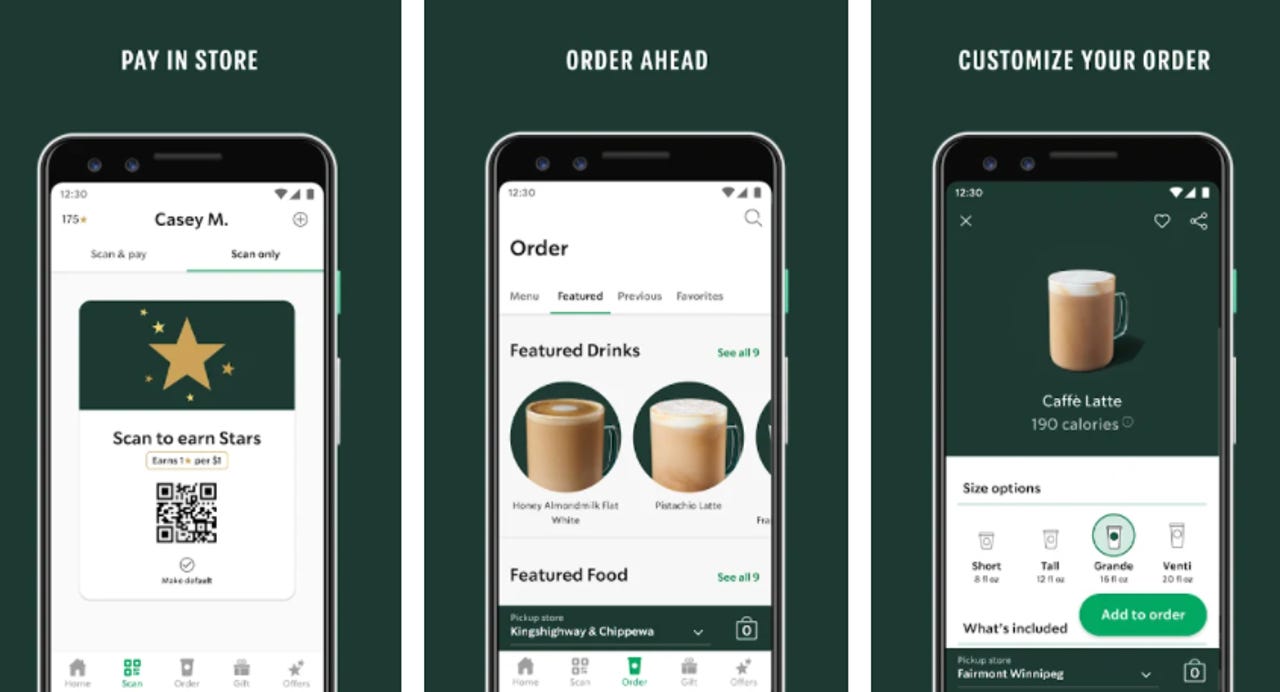
These programs are powered by data and personalization. AI helps tailor offers based on user behavior, purchase history, and even location, turning every interaction into a potential reward. As consumers increasingly expect brands to recognize and engage them individually, mobile loyalty programs will be key to standing out. In the years ahead, expect to see deeper integrations with social media, virtual influencers, and blockchain technology—bringing loyalty into the era of Web3 engagement.

#30 Evolving mobile wallets
Mobile wallets—such as Apple Pay, Google Pay, Samsung Pay—started off as digital repositories for payment cards, enabling contactless payments via a smartphone or wearable device. But in recent years, they’ve evolved into far more sophisticated platforms, integrating not just fiat payments but also cryptocurrencies, stablecoins, loyalty and rewards programmes, financing tools, and cross‐border features.
Without a doubt, their global usage is accelerating. A recent report projects over 5.3 billion mobile wallet users worldwide by 2026, representing more than half of the global population. Transaction volumes are rising as well: E-commerce and point‐of‐sale (POS) transactions via mobile wallets are growing at double-digit compound annual growth rates (CAGR), with proximity / contactless mobile payments expected to exceed US$1 trillion by 2027 in transaction values.

Geographic shifts and expanding functionalities are changing platform mobile payments
Emerging markets (Asia, Latin America, Africa) are showing particularly fast growth due to mobile‐first populations and less entrenched legacy infrastructure, with South East Asia leading the game.
Just as the popularity of mobile wallet is expanding, so are its functionalities. Beyond “store card → pay contactless”, mobile wallets now include features like loyalty & reward programs, transit passes, event tickets, budgeting tools, and even identity/document storage.
Crypto payments becoming a standard in mobile app dev
Although still relatively a small fraction, an increasing number of mobile commerce stores (like Etsy) are now accepting crypto either directly or via payment processors such as BitPay, Flexa, or Mesh. Shopify stores can enable crypto payments via third-party integrations (Coinbase Commerce, Crypto.com Pay etc.).
The integrators allow merchants to accept crypto via mobile wallets (without each merchant building their own crypto payment stack), helping them be more inclusive and future-proof while avoiding risky investment.
One of the most notable new trends is integrating cryptocurrencies / stablecoins into mobile wallets. For example:
- Apple Pay now supports via Mesh a feature enabling stablecoin payments. Users can pay with cryptos like Bitcoin, Ethereum or Solana via Apple Pay, merchants settle in stablecoins such as USDC, USDT, or PYUSD.
- Samsung Wallet has expanded its crypto experience through partnerships (e.g. Coinbase One), enabling easier crypto management, “tap-to-pay” crypto transactions, etc.
As crypto enters its mature phase, its app integration will become a default. Be ahead of your competitors and take care of it in advance!
Mobile application development trends to incorporate in your app
Download a free report with 50+ of the latest facts and stats on the future of the mobile app industry!

Top AI innovations delivered monthly!
The administrator of your personal data is Miquido sp. z o.o. sp.k., with its ... registered office in Kraków at Zabłocie 43A, 30 - 701. We process the provided information in order to send you a newsletter. The basis for processing of your data is your consent and Miquido’s legitimate interest.You may withdraw your consent at any time by contacting us at marketing@miquido.com. You have the right to object, the right to access your data, the right to request rectification, deletion or restriction of data processing. For detailed information on the processing of your personal data, please see Privacy Policy.


